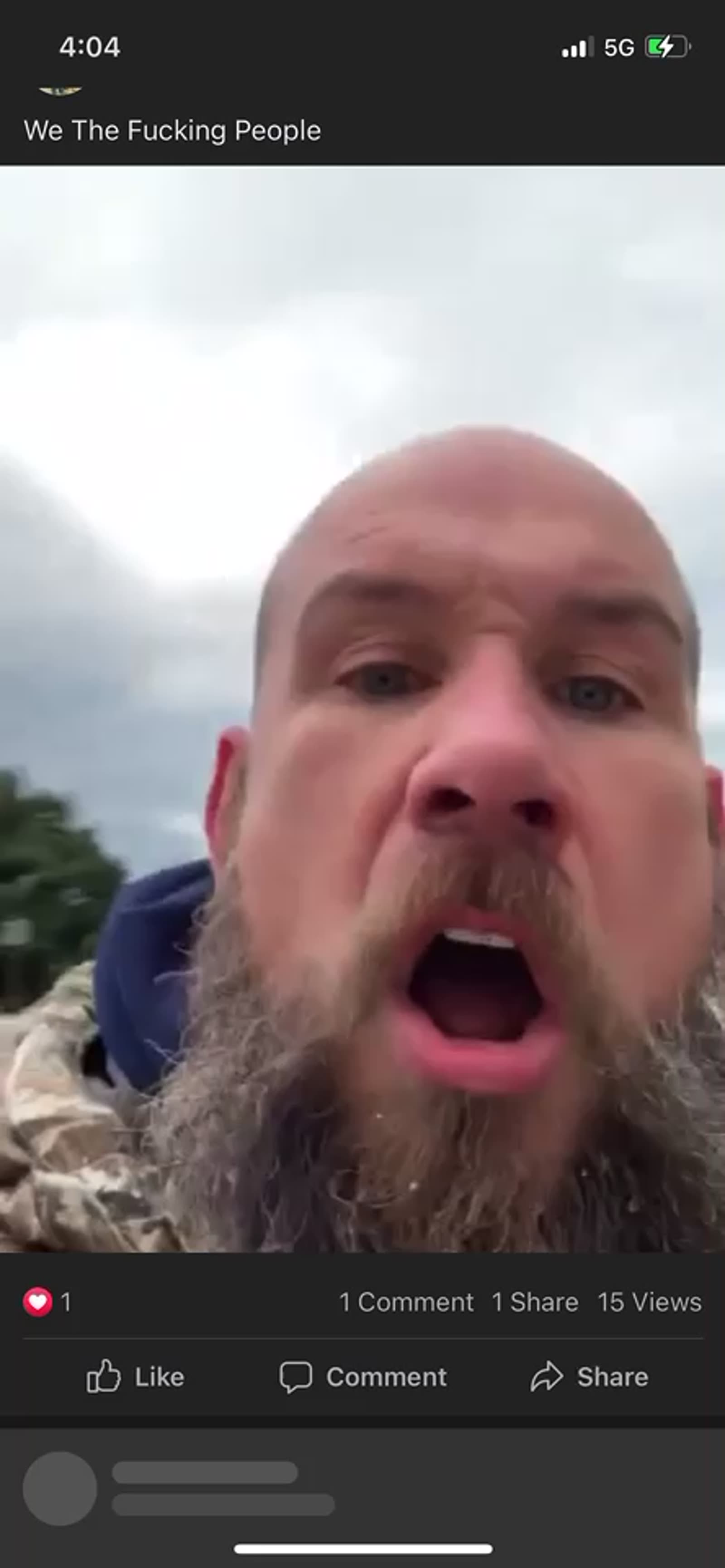
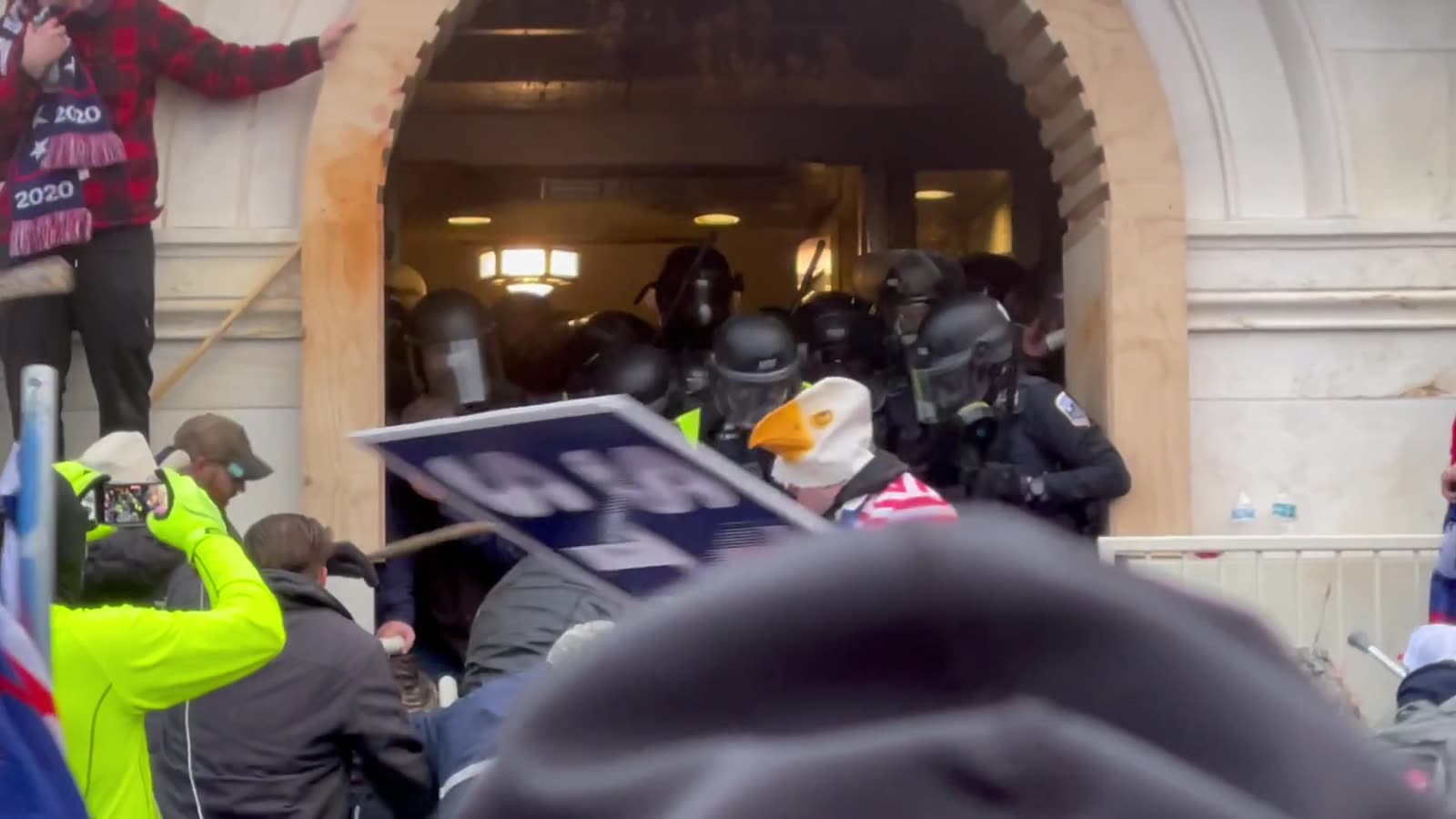
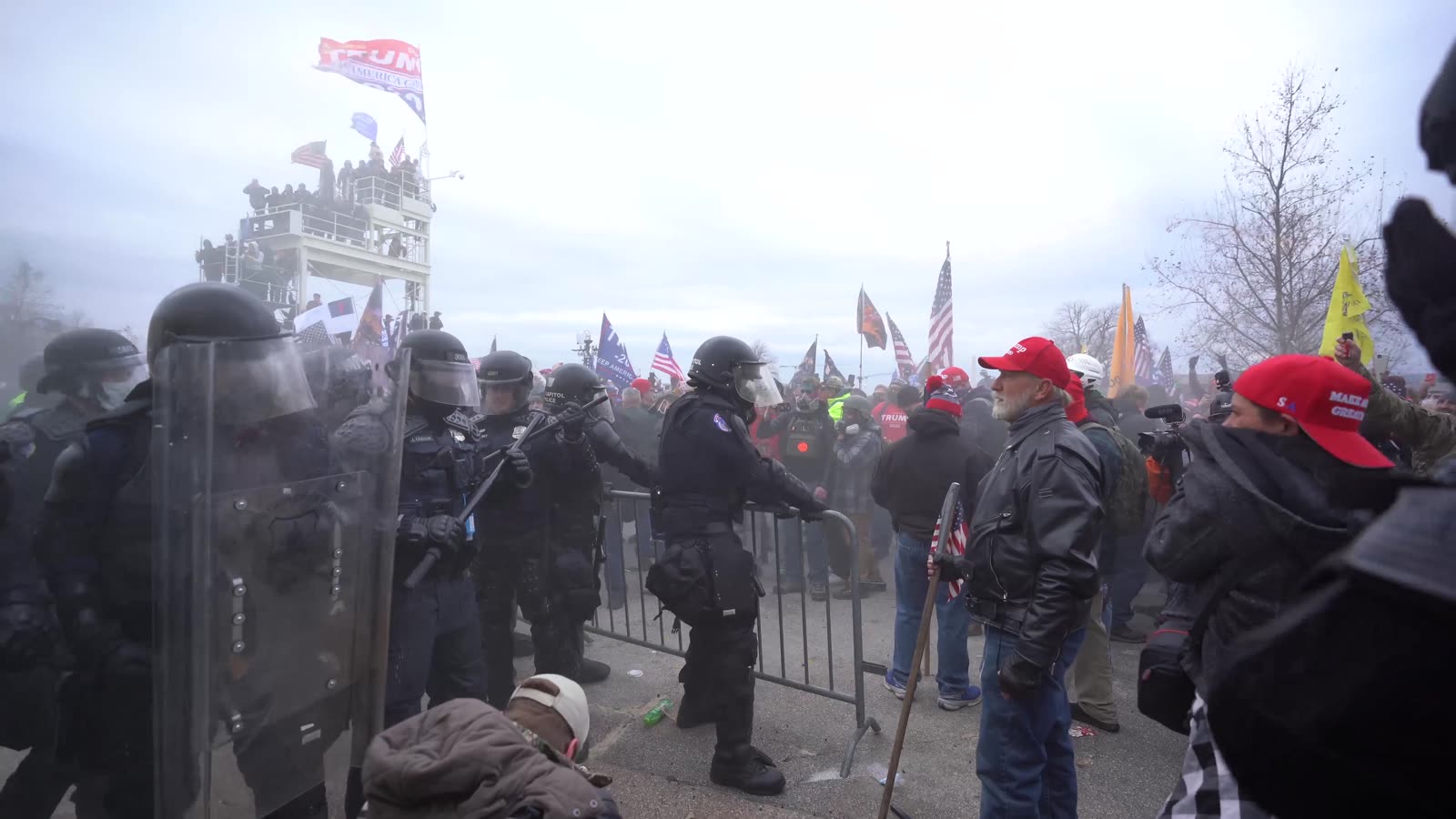
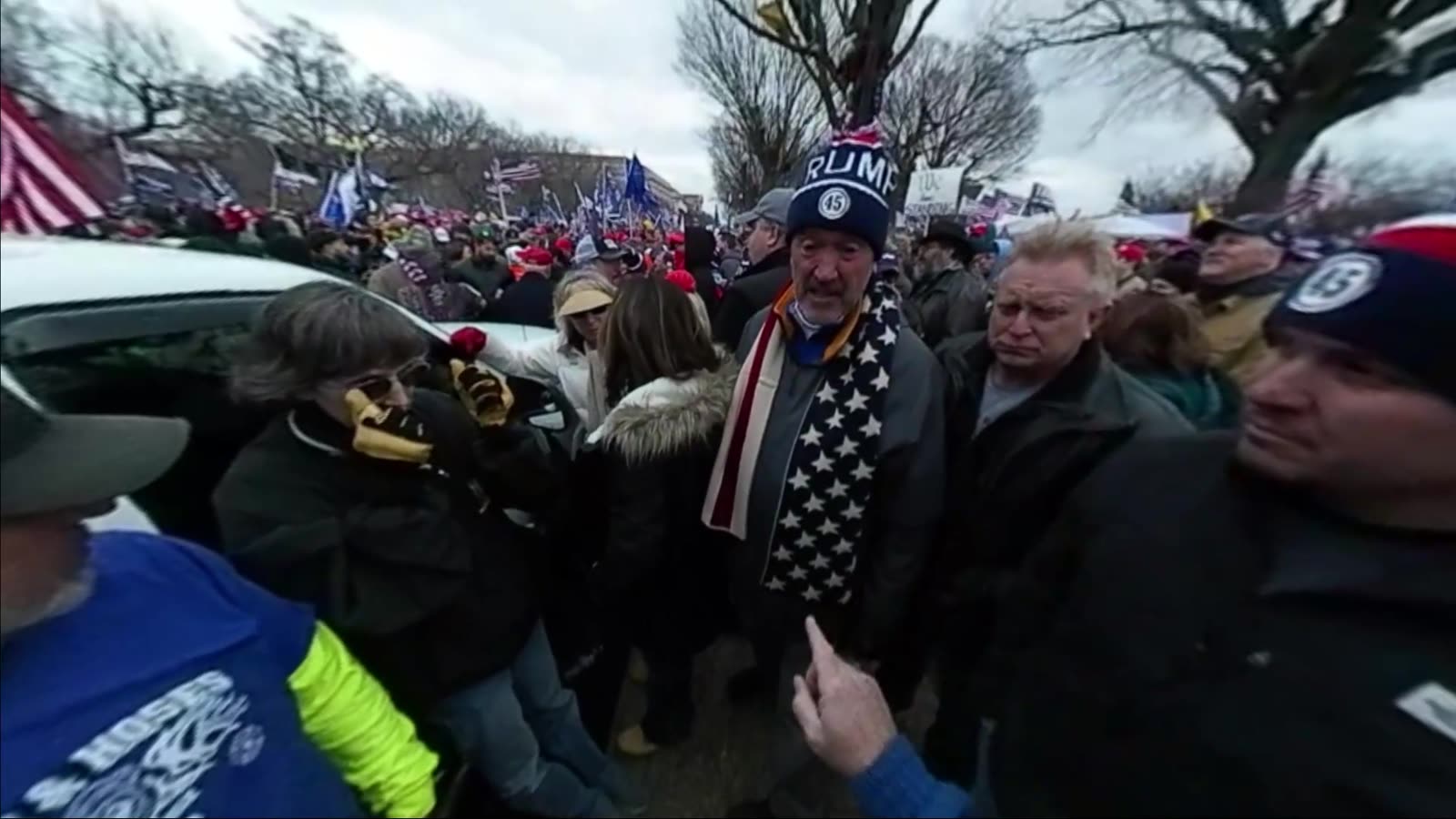
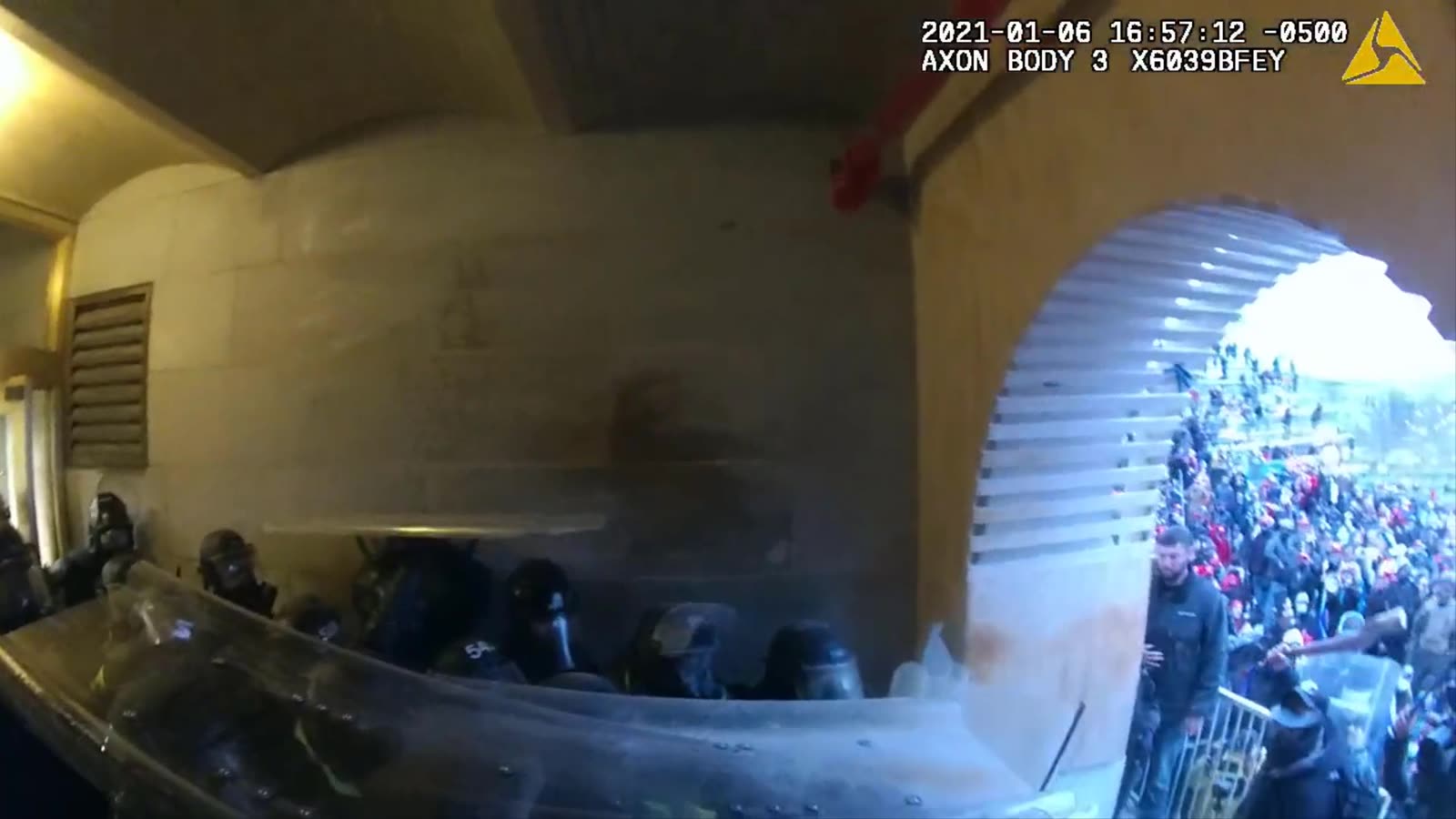
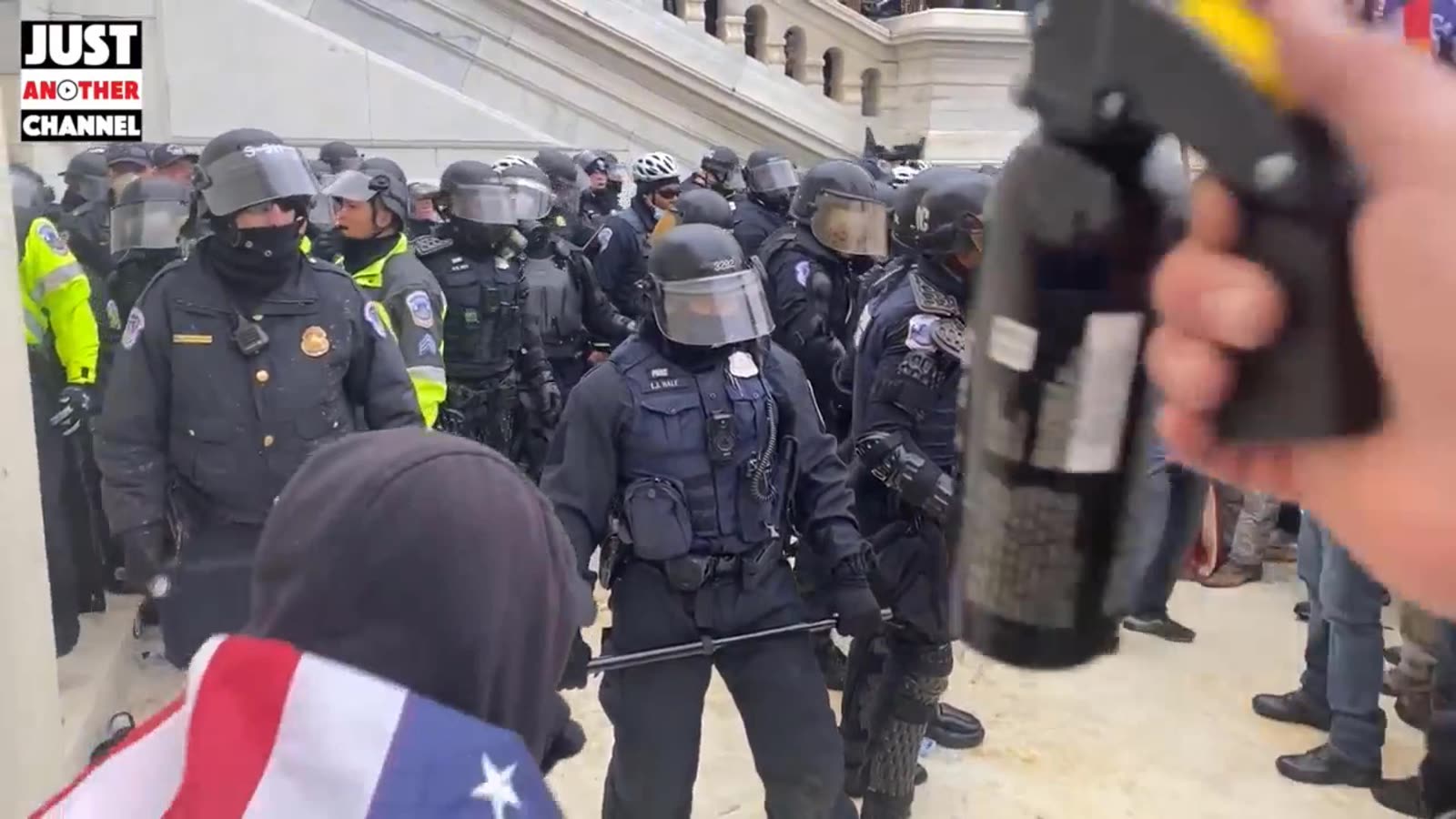
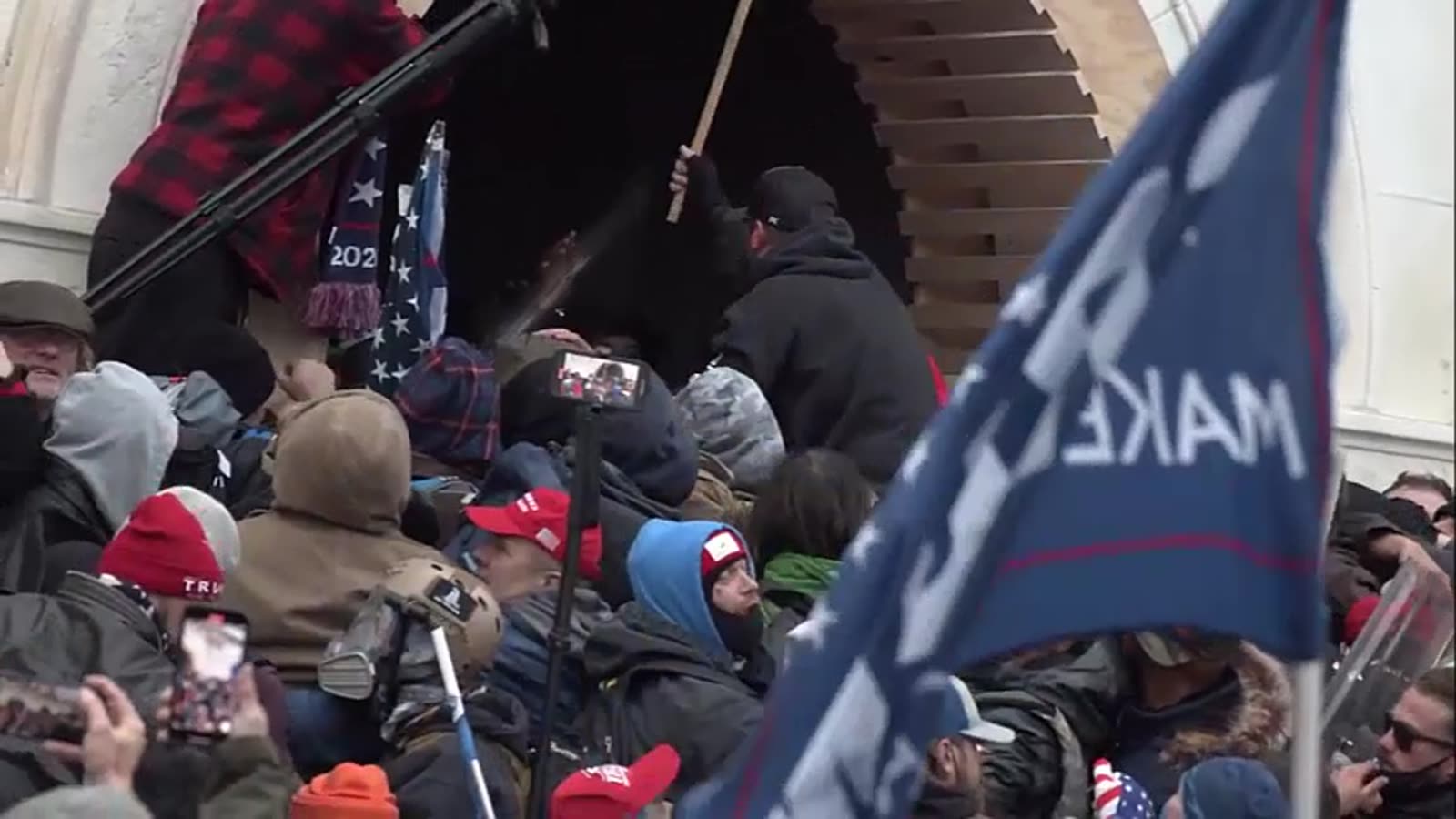
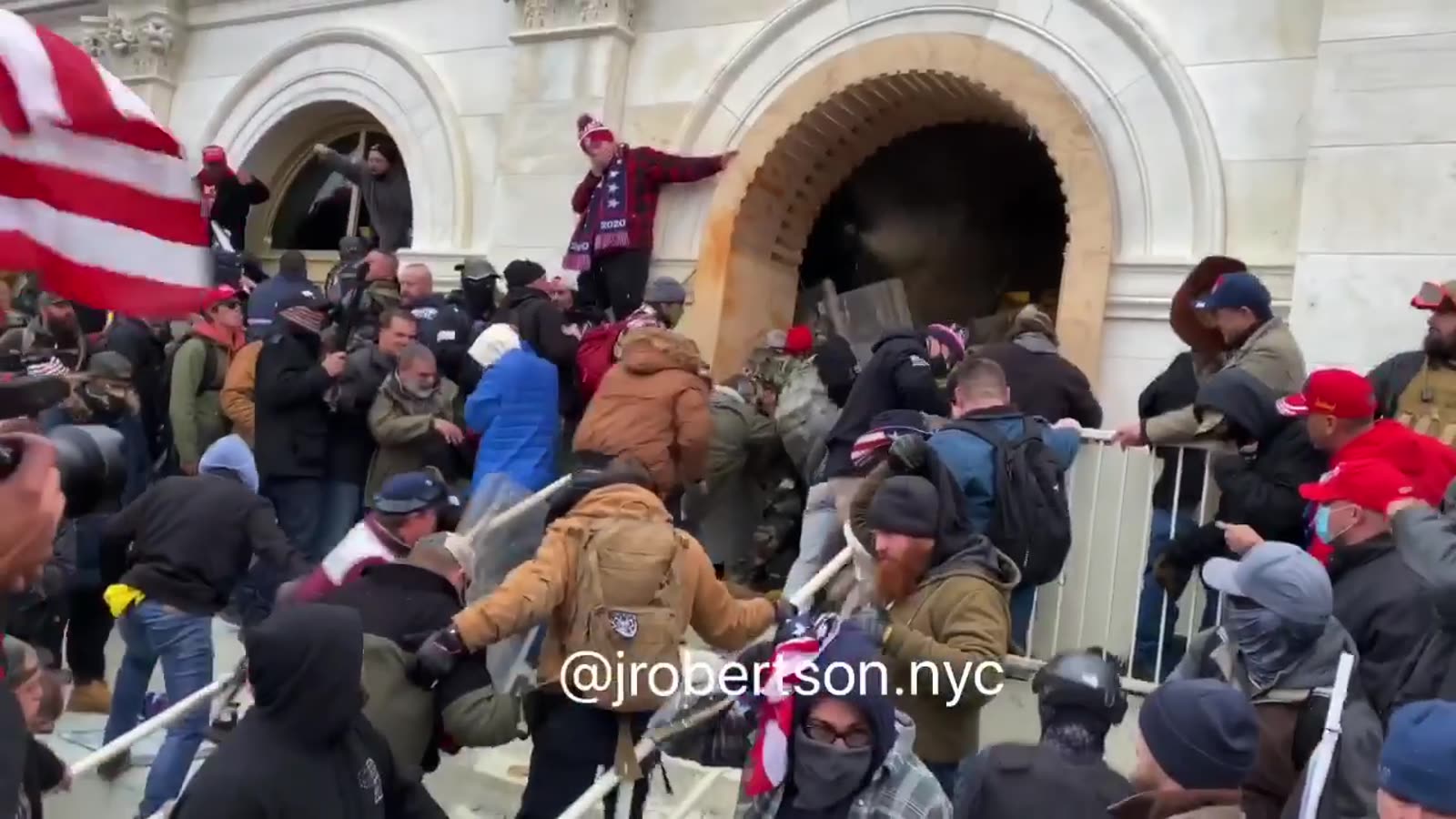
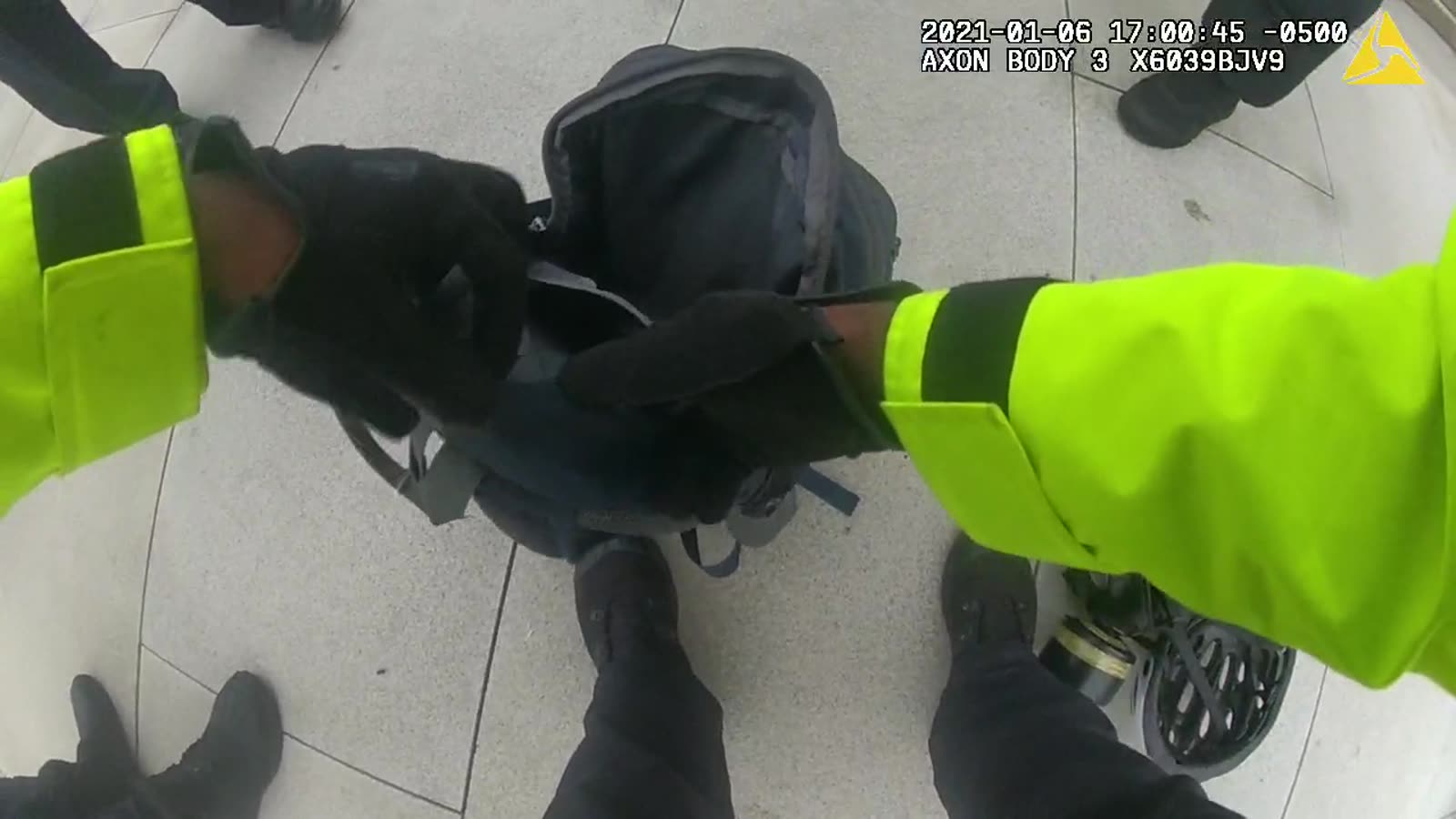
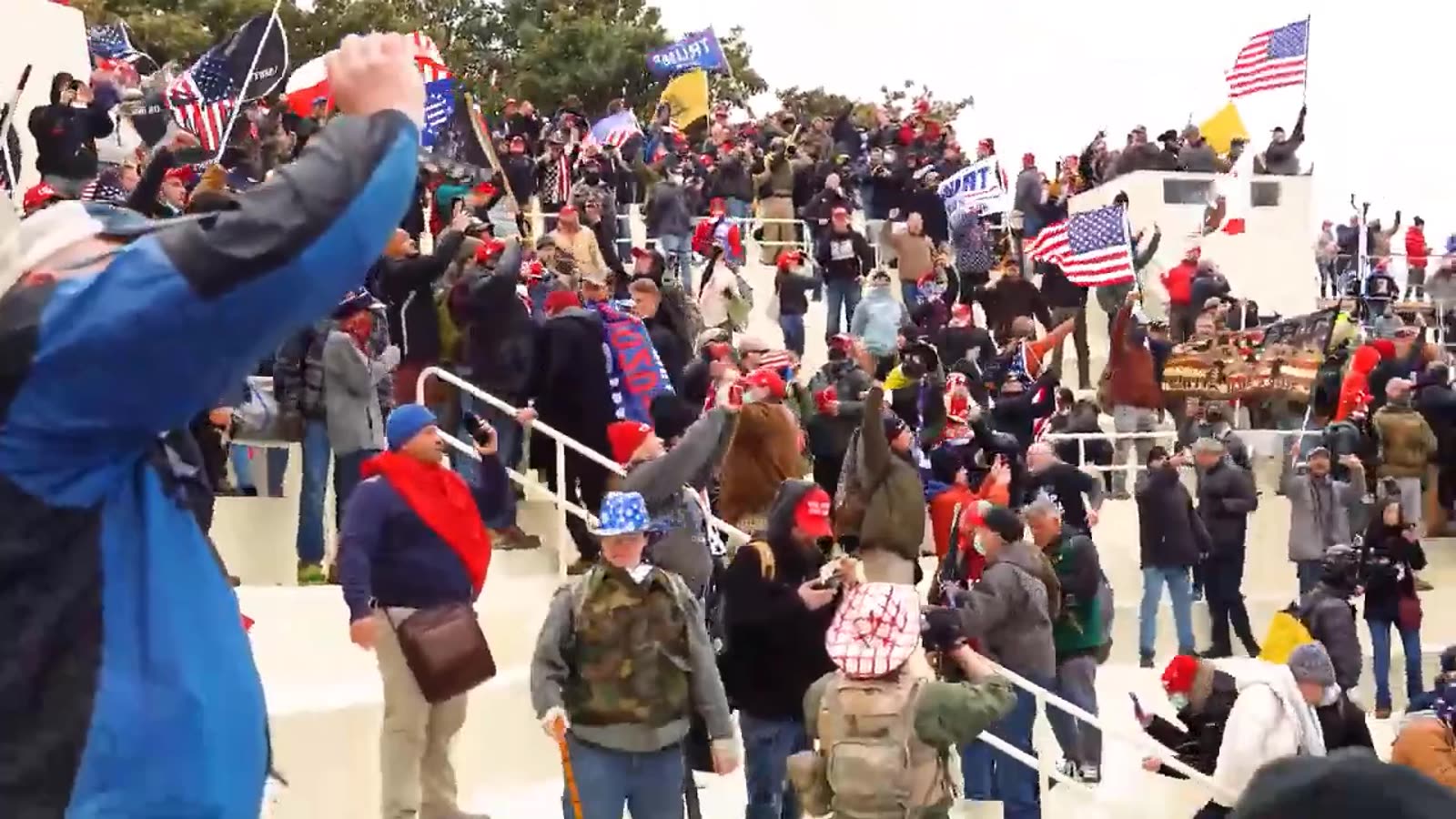
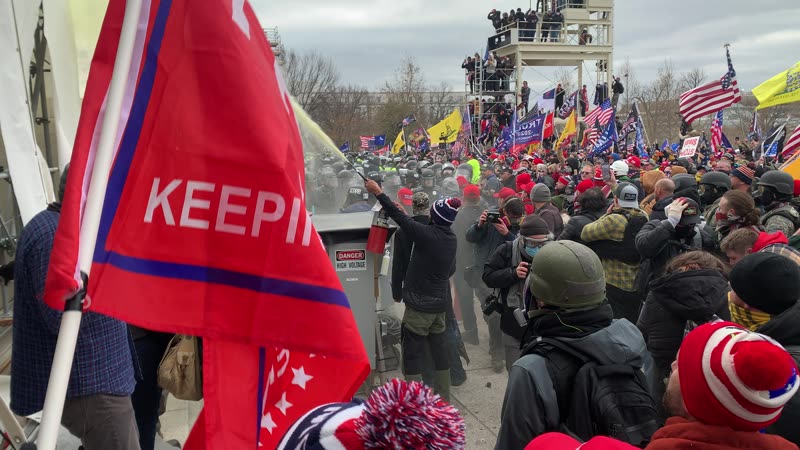
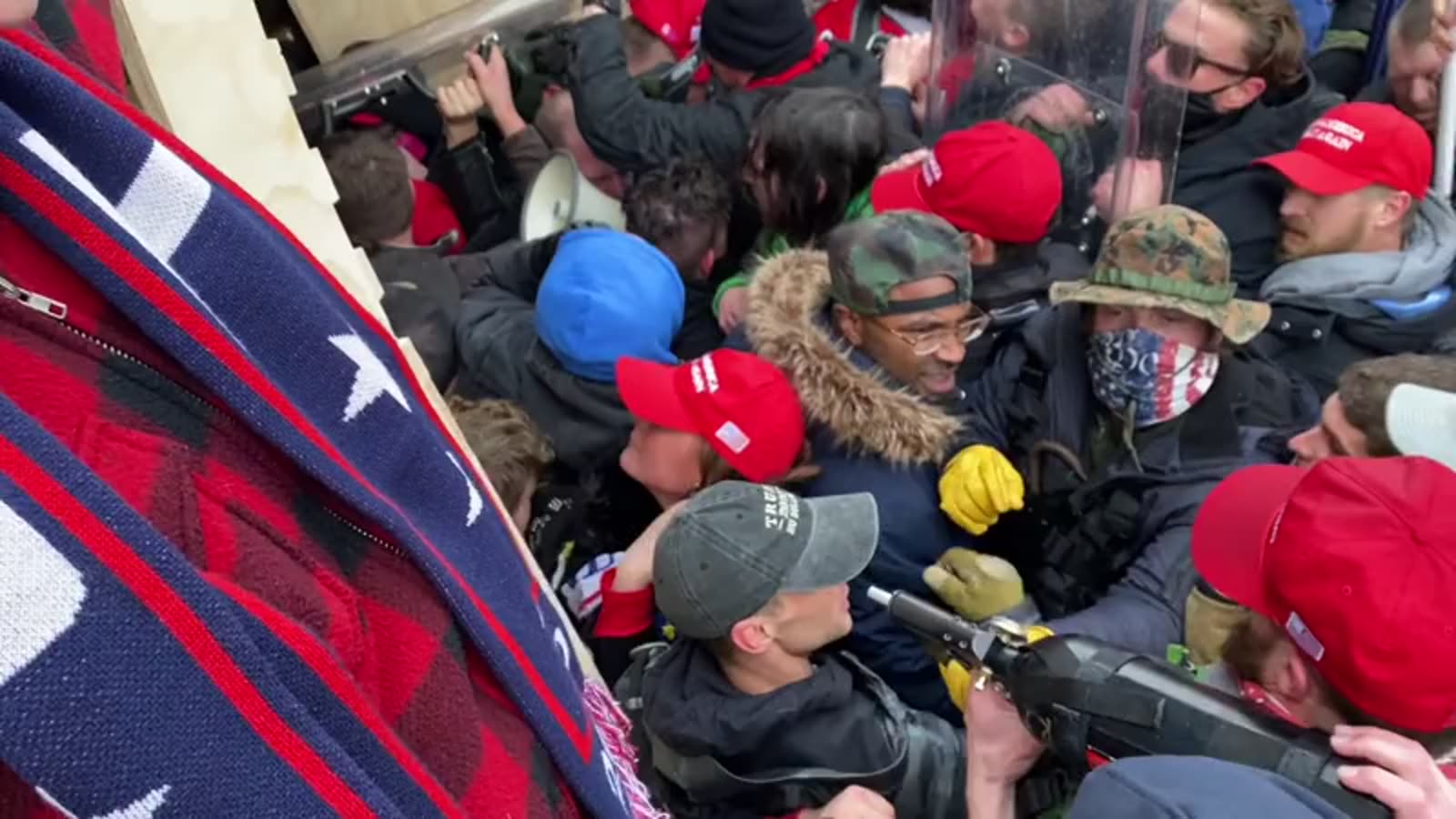
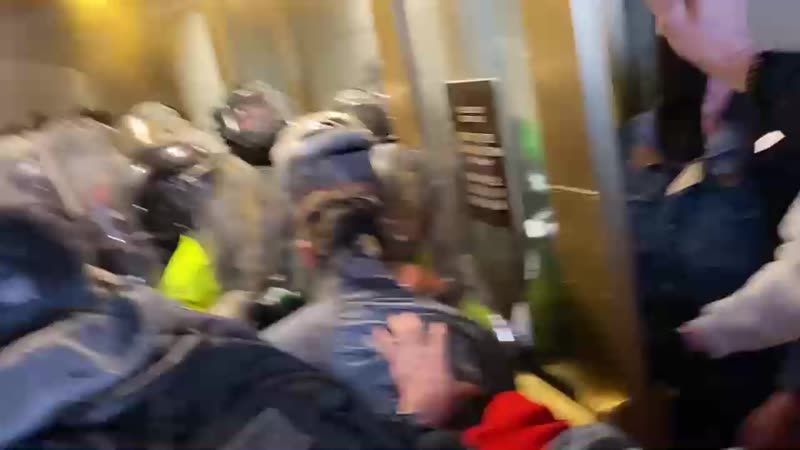
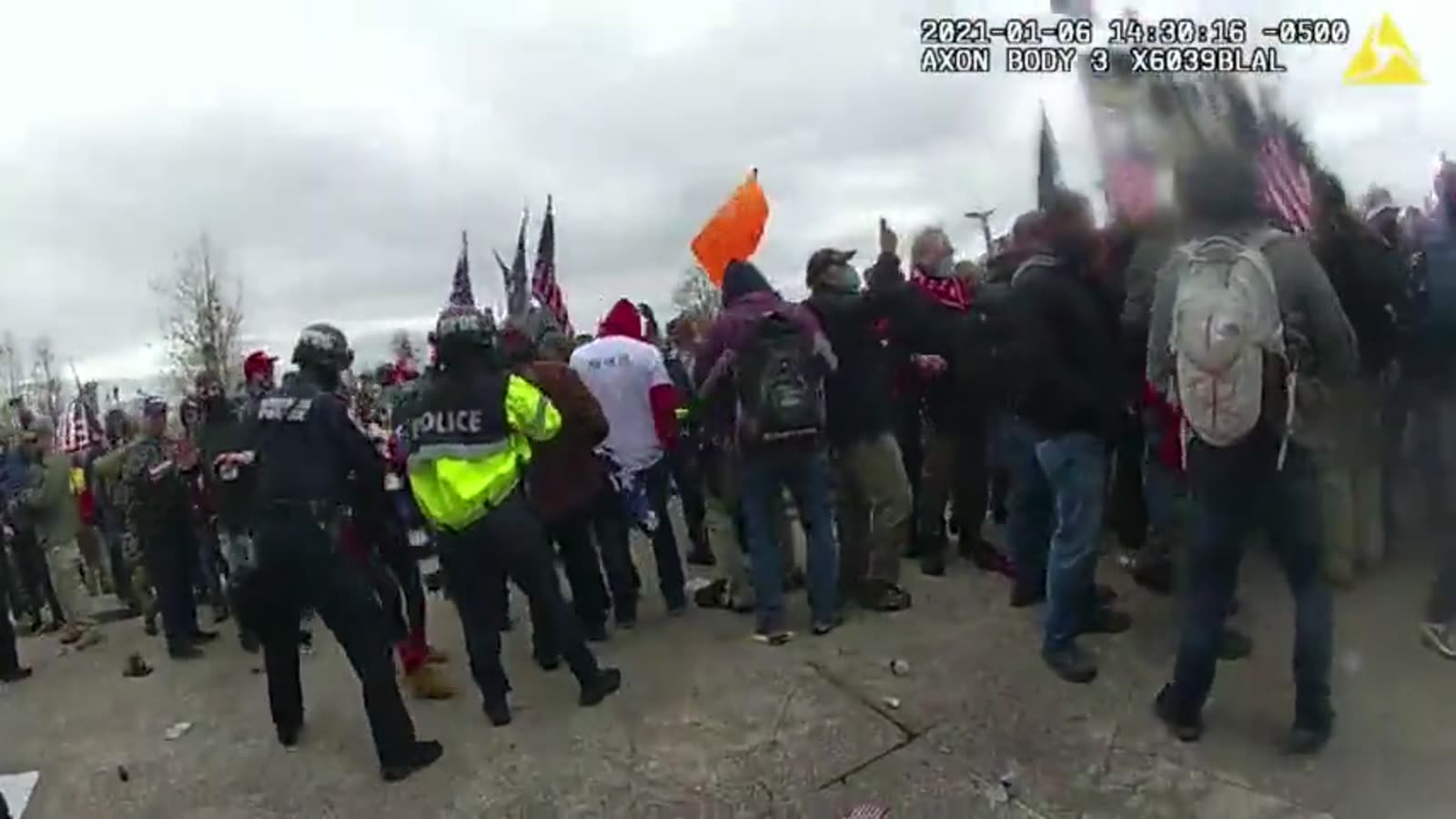
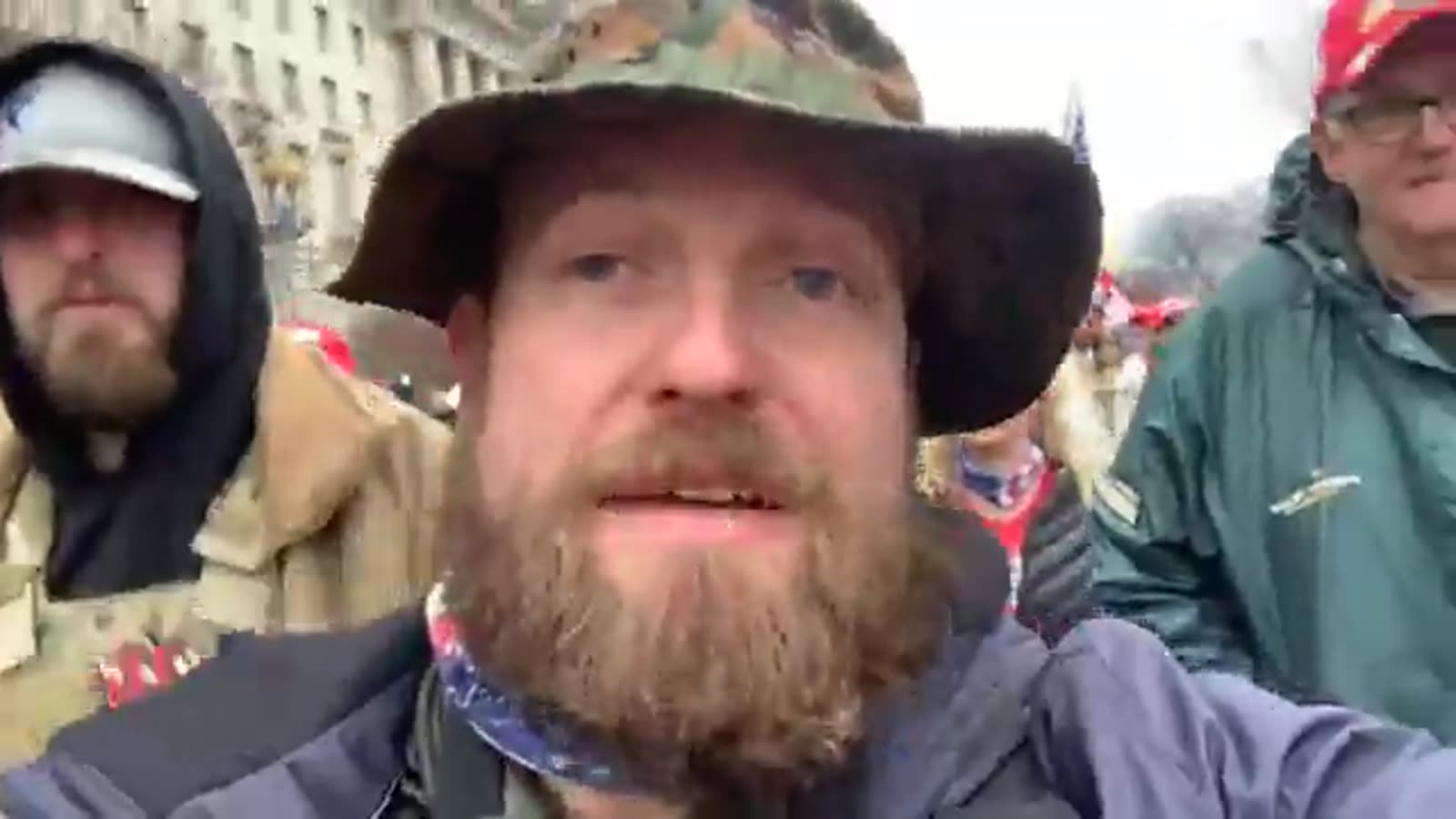
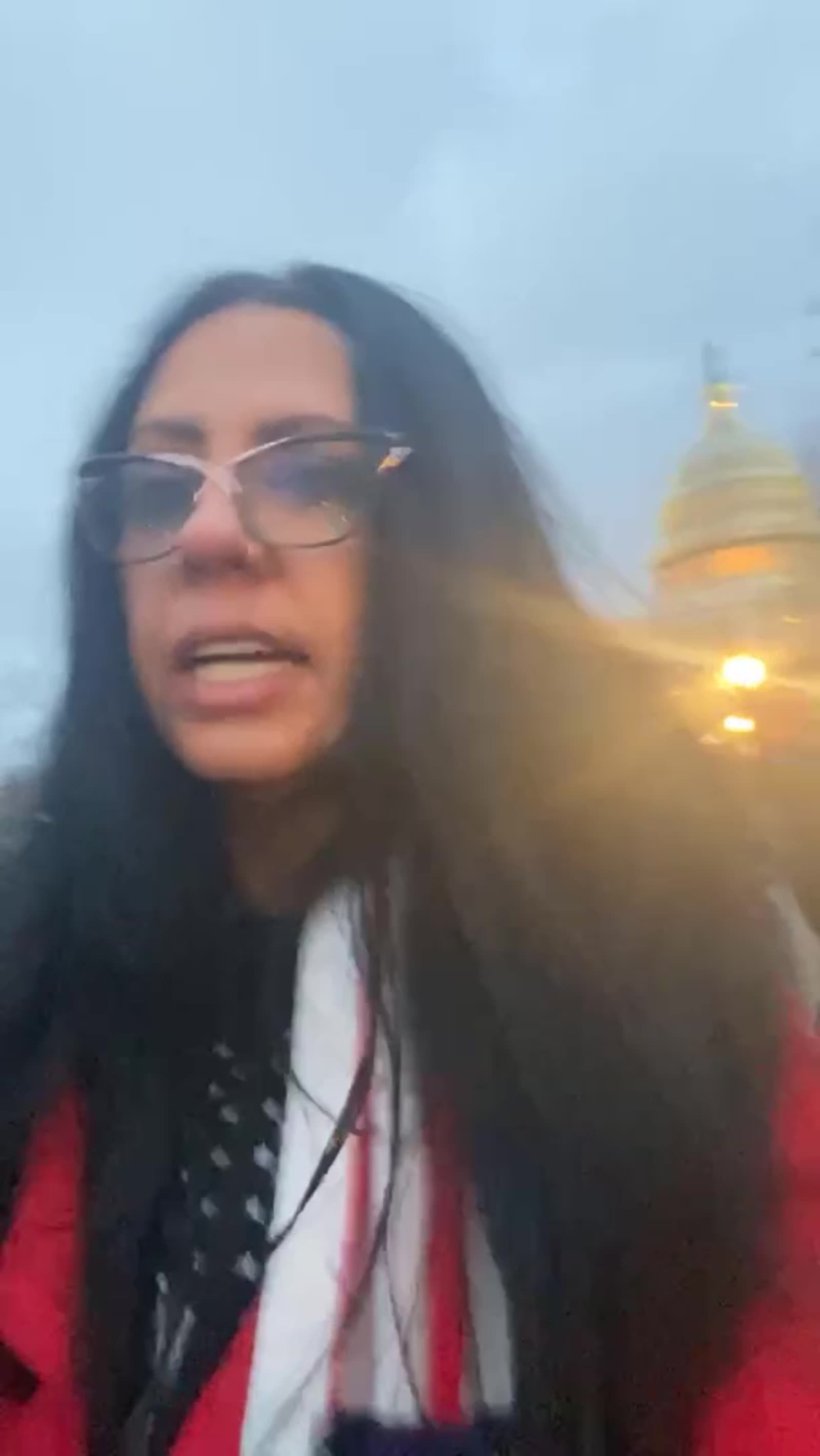
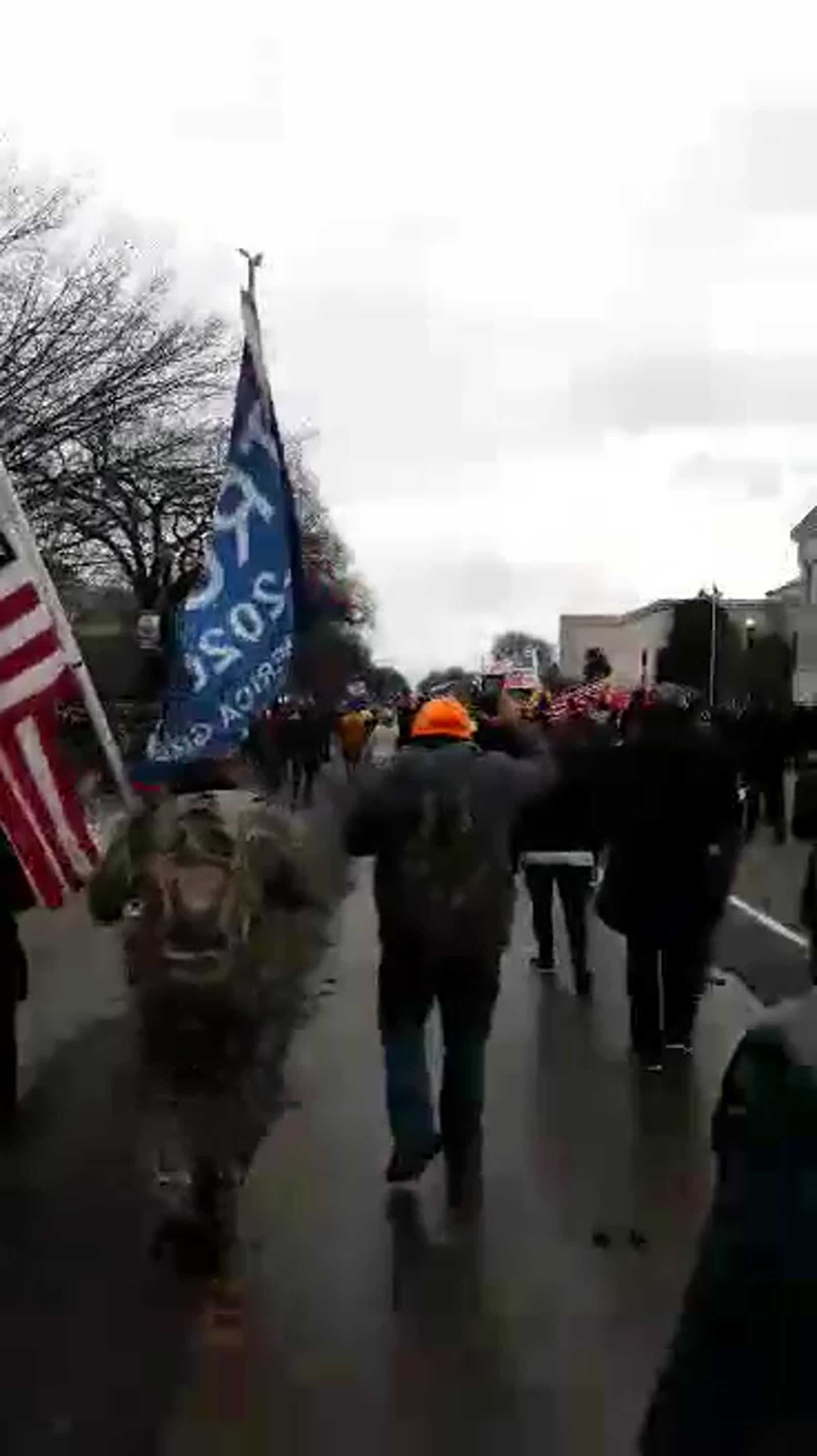
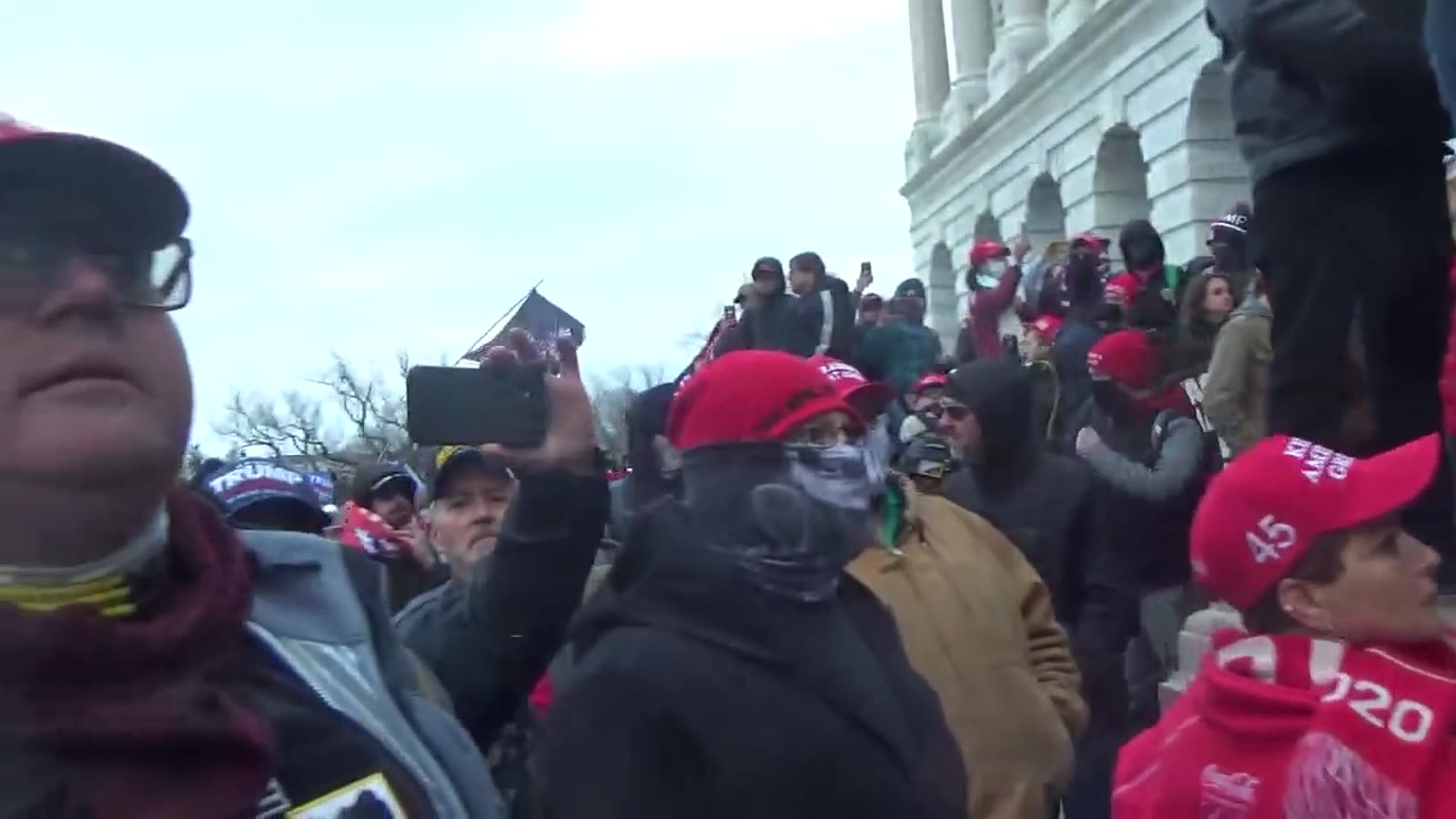
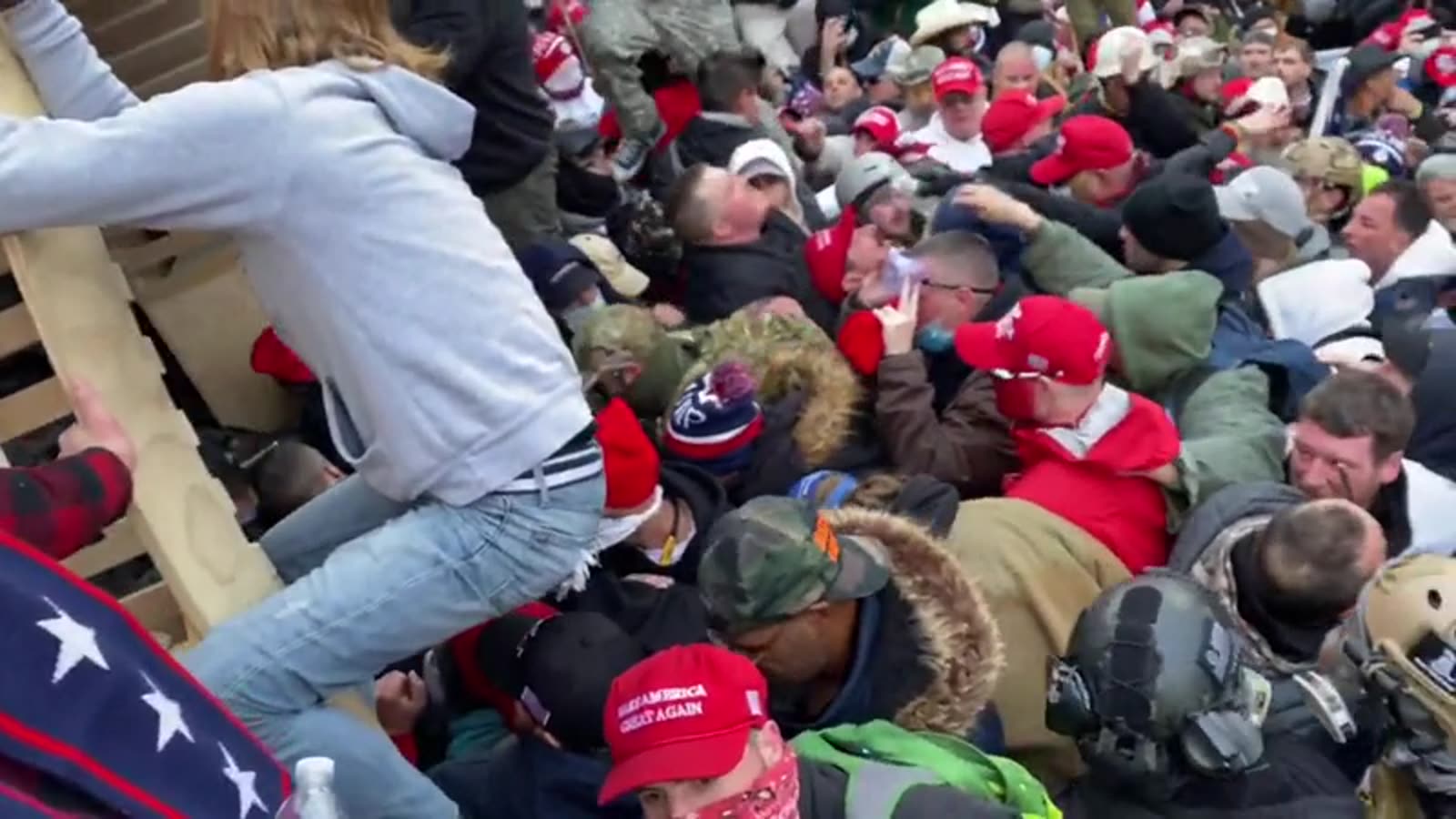
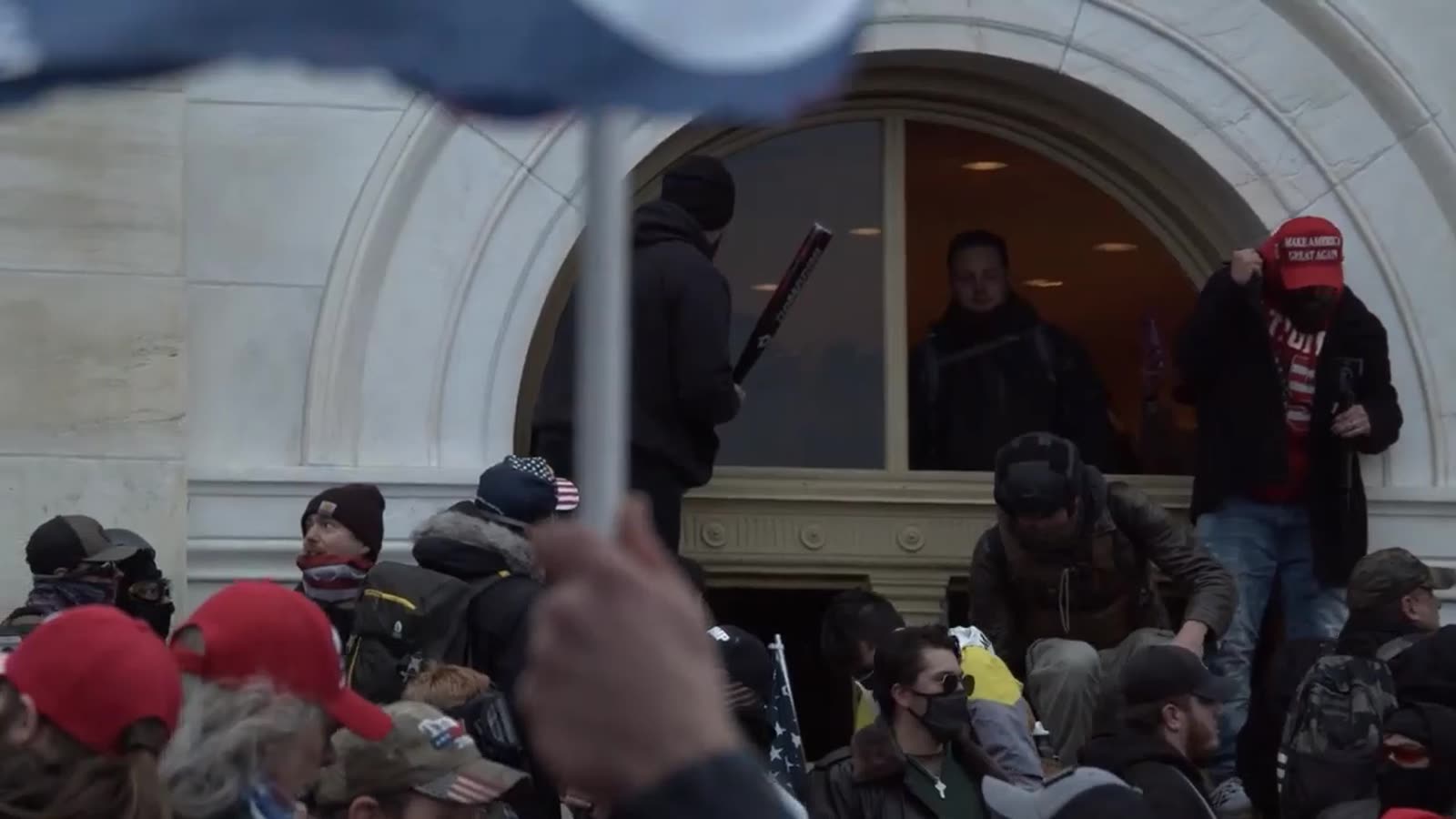
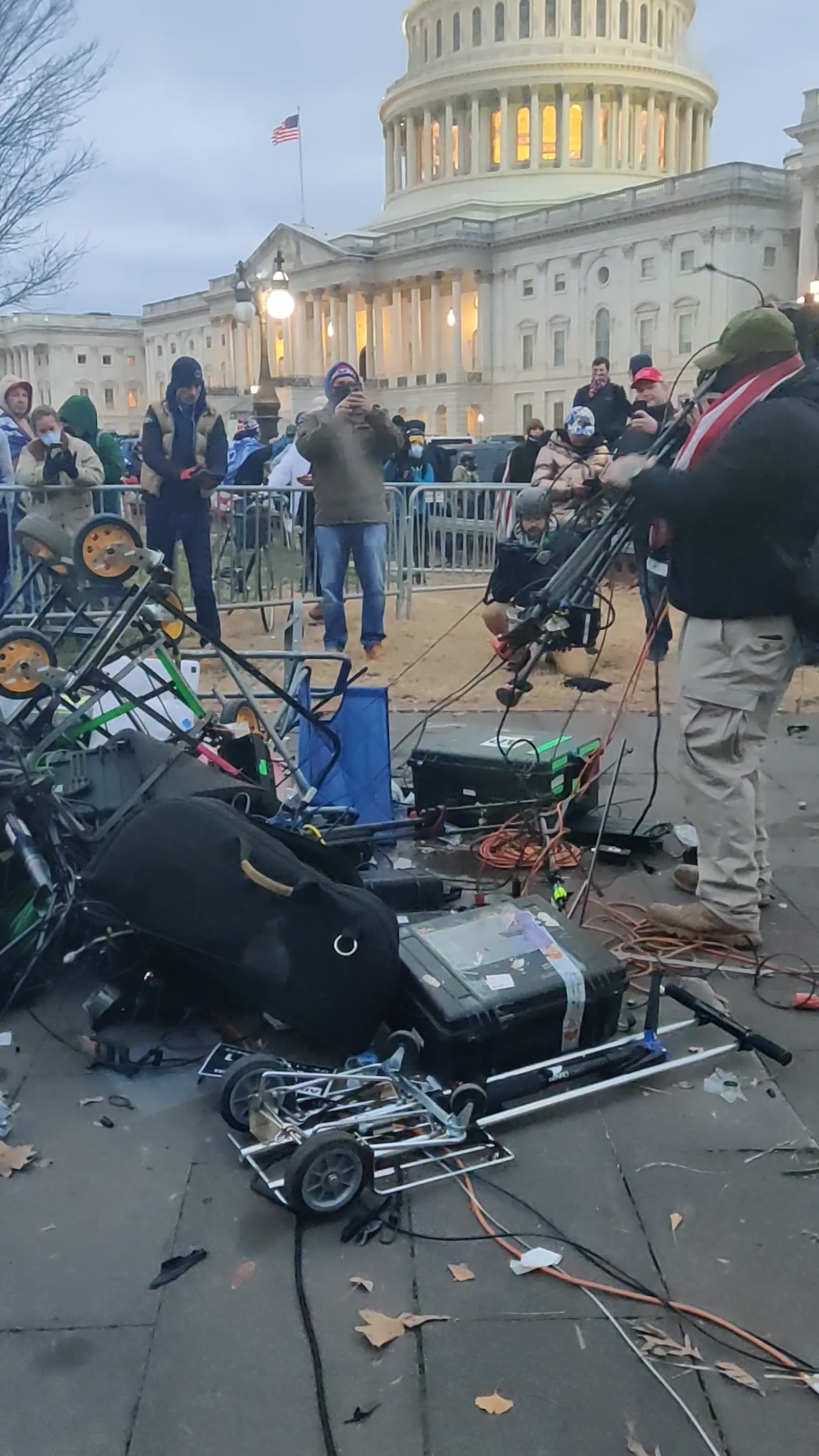
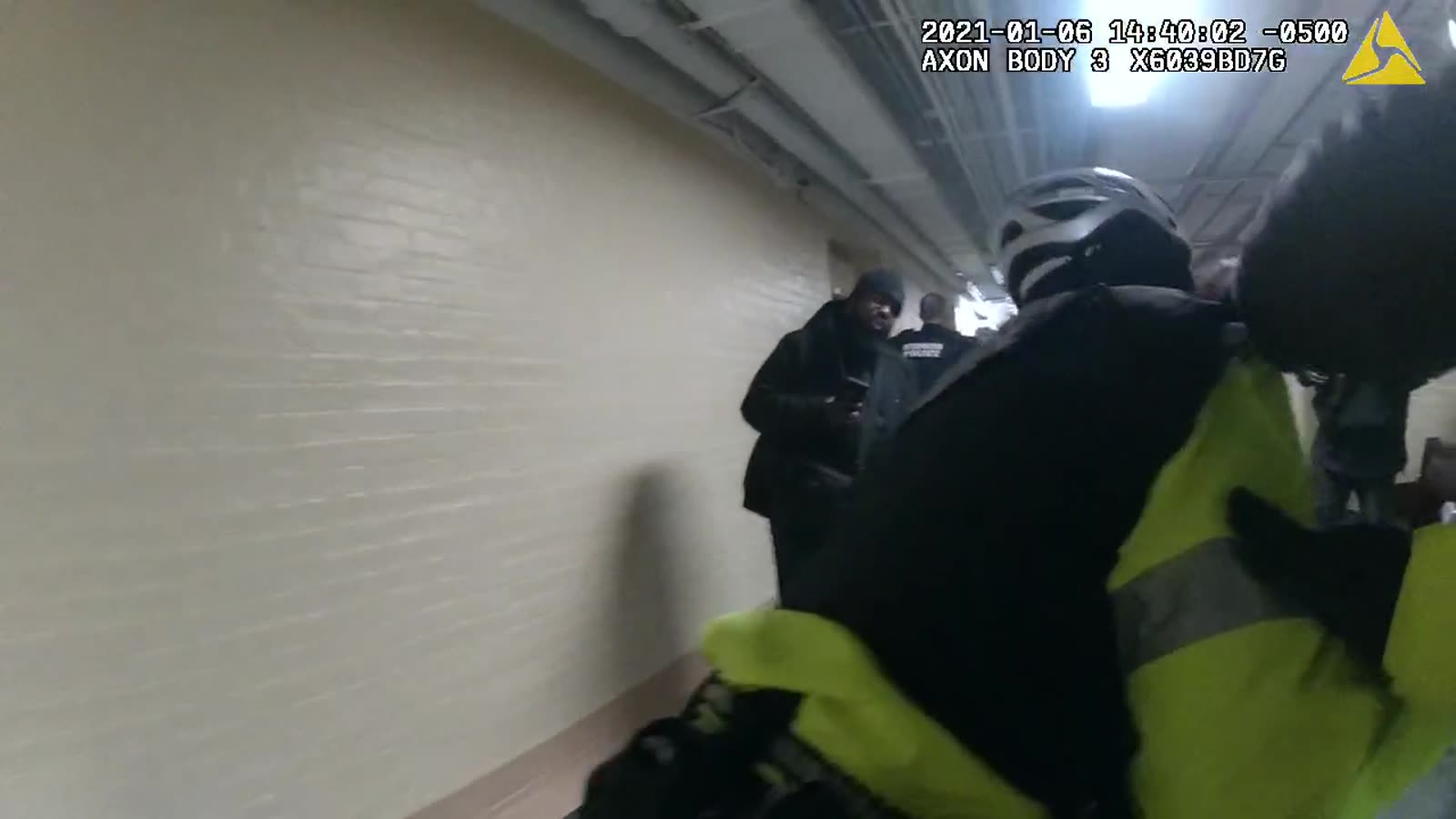
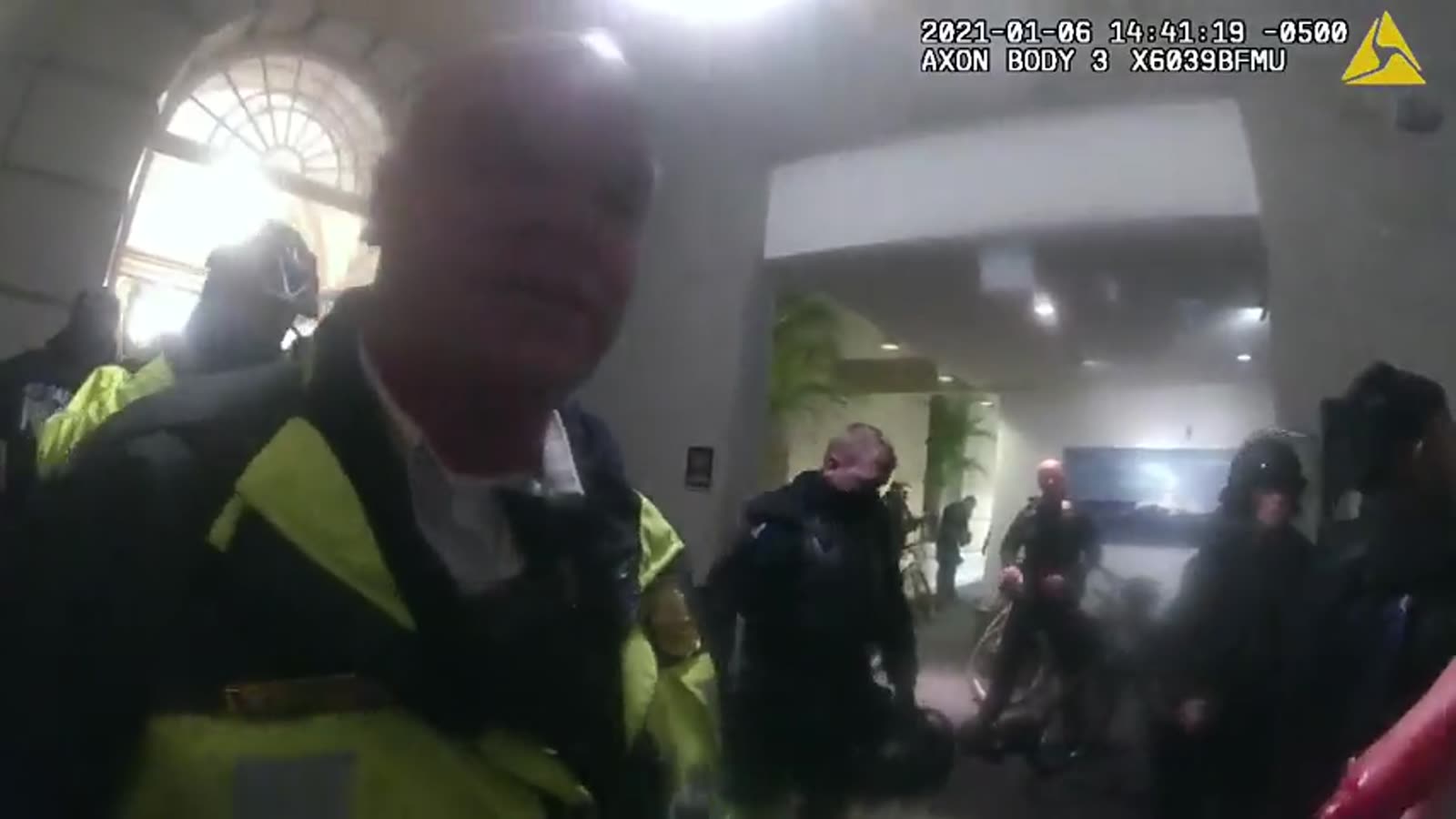
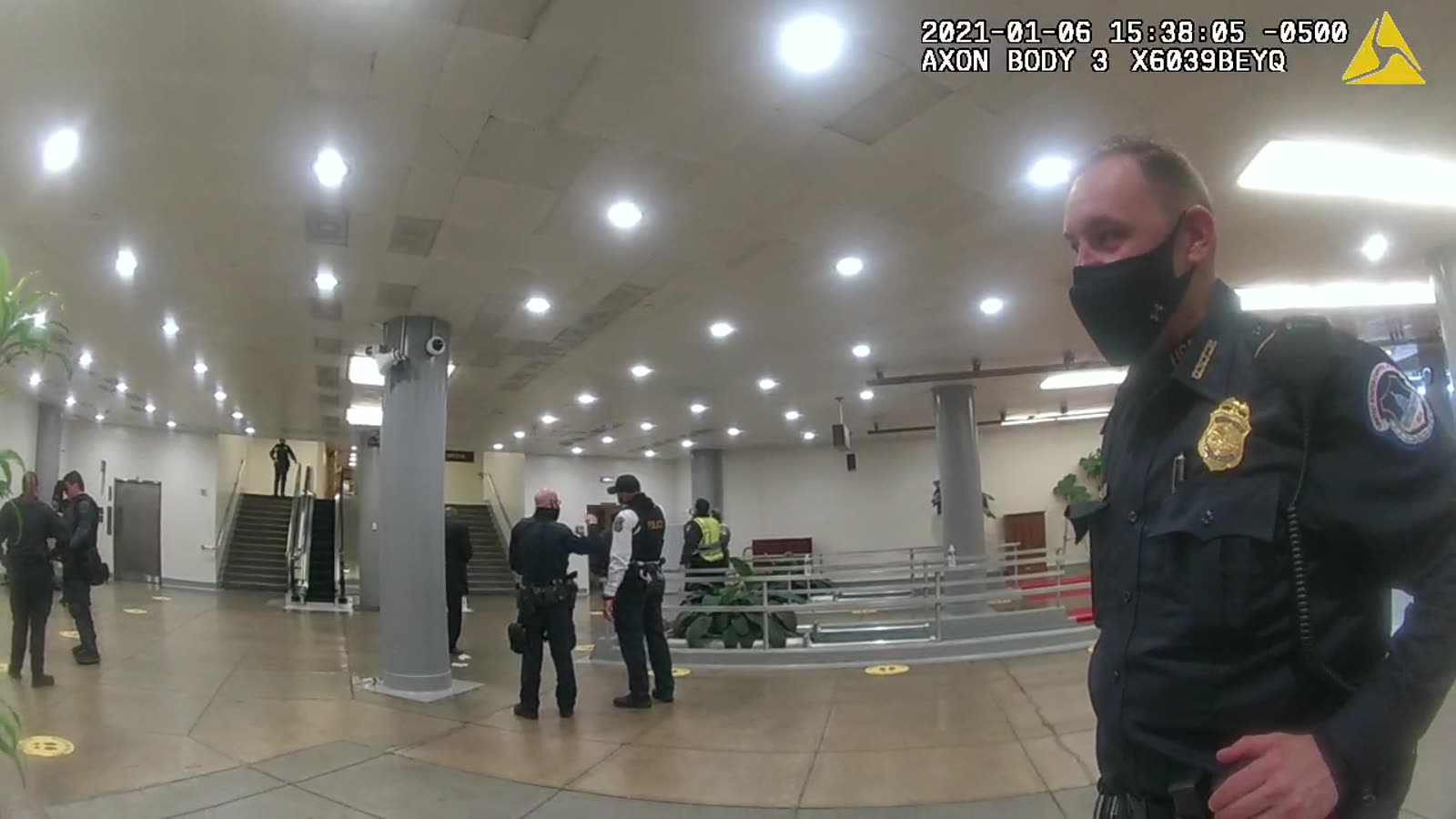
‘This is not a peaceful protest!’

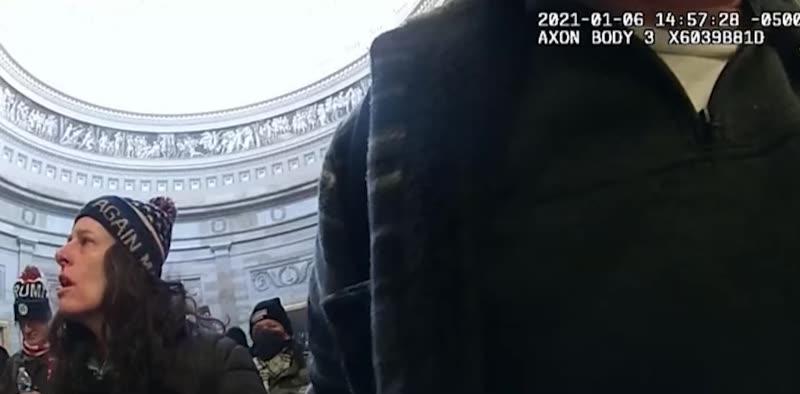
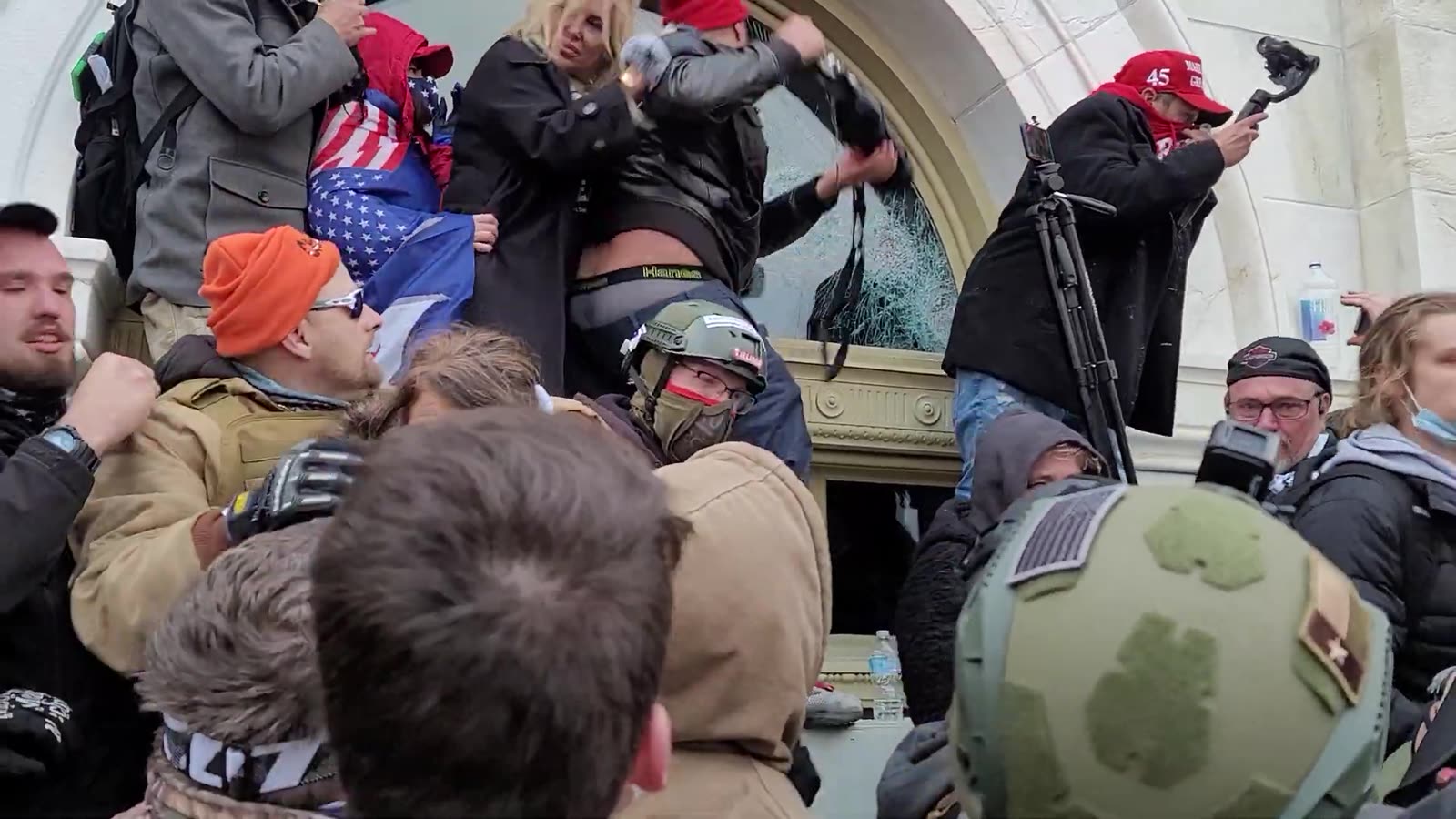
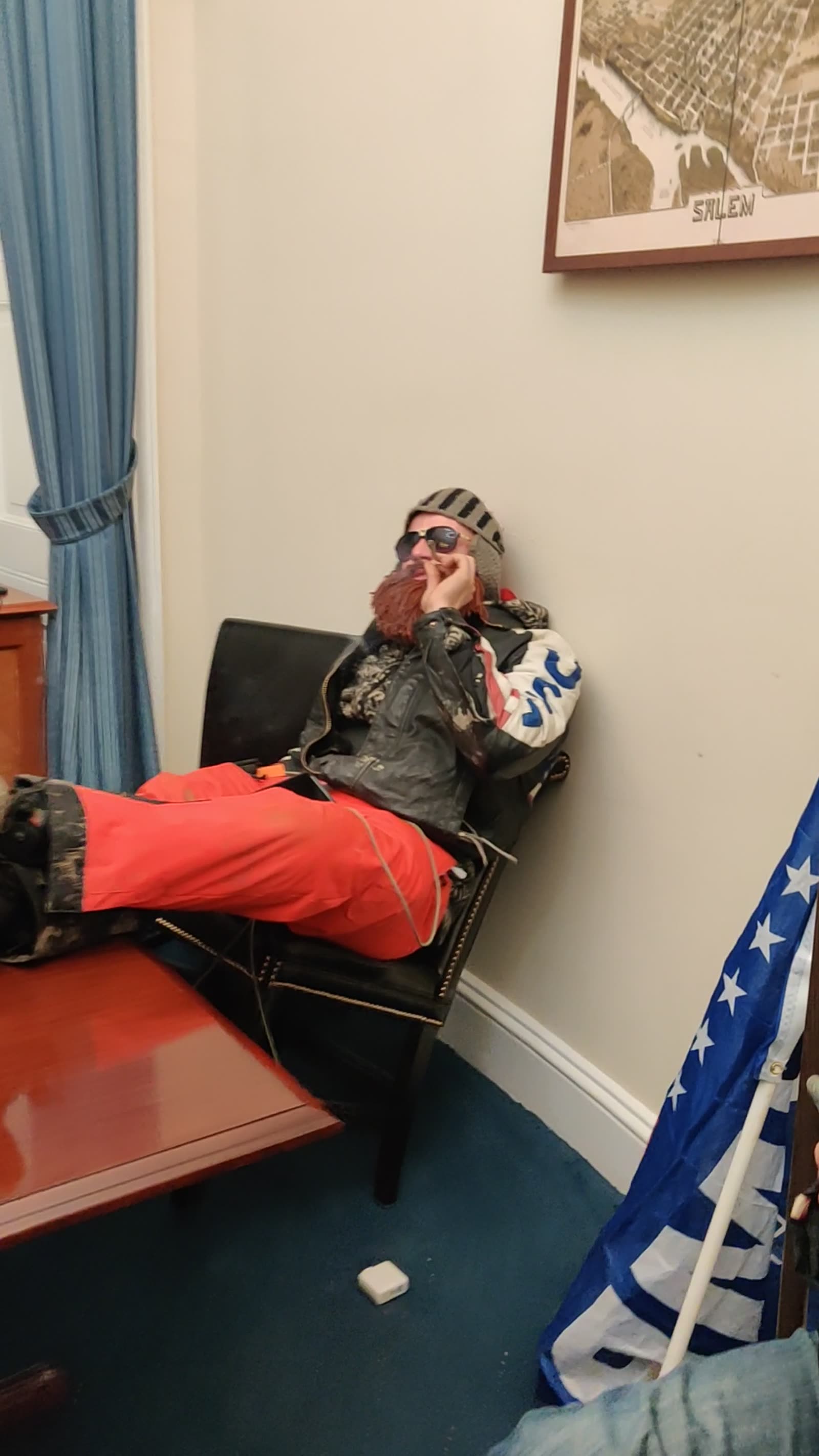
— Ryan Nichols at the Jan. 6, 2021, Capitol riot. He later pleaded guilty to assaulting police.

A visual archive of Jan. 6, 2021, through the lenses of those who were there.

In the immediate aftermath of the Jan. 6, 2021, attack on the U.S. Capitol, American political leaders almost universally condemned the riot as an act of domestic terrorism that threatened democracy. Now, President Trump calls Jan. 6 a “day of love” and the rioters “great patriots.” And since he issued mass pardons to the rioters, his administration has been trying to rewrite history.

NPR has tracked every Jan. 6 prosecution in a public database, and, drawing on thousands of hours of footage and years of reporting, created a front-line account of the riot. The evidence vividly shows the planning for “revolution” and the brutality of violence on a day that continues to shape American politics.

Explore the database and coverage, or scroll to read the full narrative.

This material includes profanity, violence and references to suicide.

Photo collage of two stills taken from video. One is of the 2020 debate between Trump and Biden, while the other is of Trump giving a speech before the election. In the debate video, Trump says, “Proud Boys, stand back and stand by.”

Chapter 1: The run-up

Heading into the 2020 presidential election, the country was engulfed by overlapping crises: the COVID-19 pandemic and prolonged lockdowns, along with mass protests, counterprotests and, at times, violent unrest following the police murder of George Floyd in Minneapolis.

C-SPAN

During a presidential debate between Trump and Joe Biden, Trump was asked whether he would condemn violence from the far right as well as the far left.

TRUMP: Do you want to call them — what do you want to call them? Give me a name, give me a name. Go ahead, who would you like me to condemn?

CHRIS WALLACE, MODERATOR: White supremacists and racists.

BIDEN: Proud Boys.

WALLACE: White supremacists and white militias.

BIDEN: Proud Boys.

TRUMP: Proud Boys, stand back and stand by. But I’ll tell you what. I’ll tell you what: Somebody’s got to do something about antifa and the left, because this is not a right-wing problem, this is a left-wing — this is a left-wing problem.

The Proud Boys, a right-wing street gang with a history of violence, received a boost in membership following Trump’s comments.

Roll Call Factbase

Ahead of the 2020 election, Trump repeatedly claimed that the only way he could lose was through cheating.

“And hopefully we have judges that are going to give it a fair call, because if they give it a fair call, we’re gonna win this election. The only way they can take this election away from us is if this is a rigged election. We’re gonna win this election. We’re gonna win this election.”
Photo collage of various imagery leading up to Jan. 6. Trump gives a post-election speech where he says, “Frankly, we did win this election.” One man films himself loading bullets while election news plays in the background, while another speaks to the camera. Trump tweets “Be there, will be wild!” about a big protest in D.C. on Jan. 6.

Chapter 2: “Stop the Steal”

On election night, long before election officials or news networks had declared a winner, Trump claimed that he had won and that the election was being stolen from him.

C-SPAN
“This is a fraud on the American public. This is an embarrassment to our country. We were getting ready to win this election. Frankly, we did win this election.”

Almost immediately, Trump, his campaign and his allies were leading what they called the “Stop the Steal” movement.

Courts across the country almost universally rejected the Trump campaign’s claims of widespread election fraud or other irregularities. Inside the Trump campaign, officials privately acknowledged that they had found no evidence of fraud that could have changed the outcome. State election officials also certified Joe Biden’s victory.

But Trump continued to pressure them.

Listen: Excerpt from President Trump’s call with Georgia election officials on Jan. 2, 2021
34 sec.

“So, look, all I want to do is this. I just want to find, uh, 11,780 votes — which is one more than we have — because we won the state. And flipping the state is a great testament to our country ’cause, you know, there’s this — there’s just a — it’s a testament that they could admit to a mistake — or whatever you want to call it, if it was a mistake, I don’t know. A lot of people think it wasn’t a mistake. It was much more, uh, criminal than that.”

A central focus of “Stop the Steal” was a protest movement led, in part, by right-wing activists such as Infowars host Alex Jones, longtime Trump ally Roger Stone and the white nationalist and Holocaust denier Nick Fuentes.

And on Dec. 19, 2020, Trump posted on Twitter:

Peter Navarro releases 36-page report alleging election fraud “more than sufficient” to swing victory to Trump https://washex.am/3nwaBCe. A great report by Peter. Statistically impossible to have lost the 2020 Election. Big protest in D.C. on January 6th. Be there, will be wild!

That day, Congress was set to meet to certify the election, a process that is typically ceremonial. But Trump was pressuring Vice President Mike Pence and Republicans in Congress to try to reject Biden’s victory.

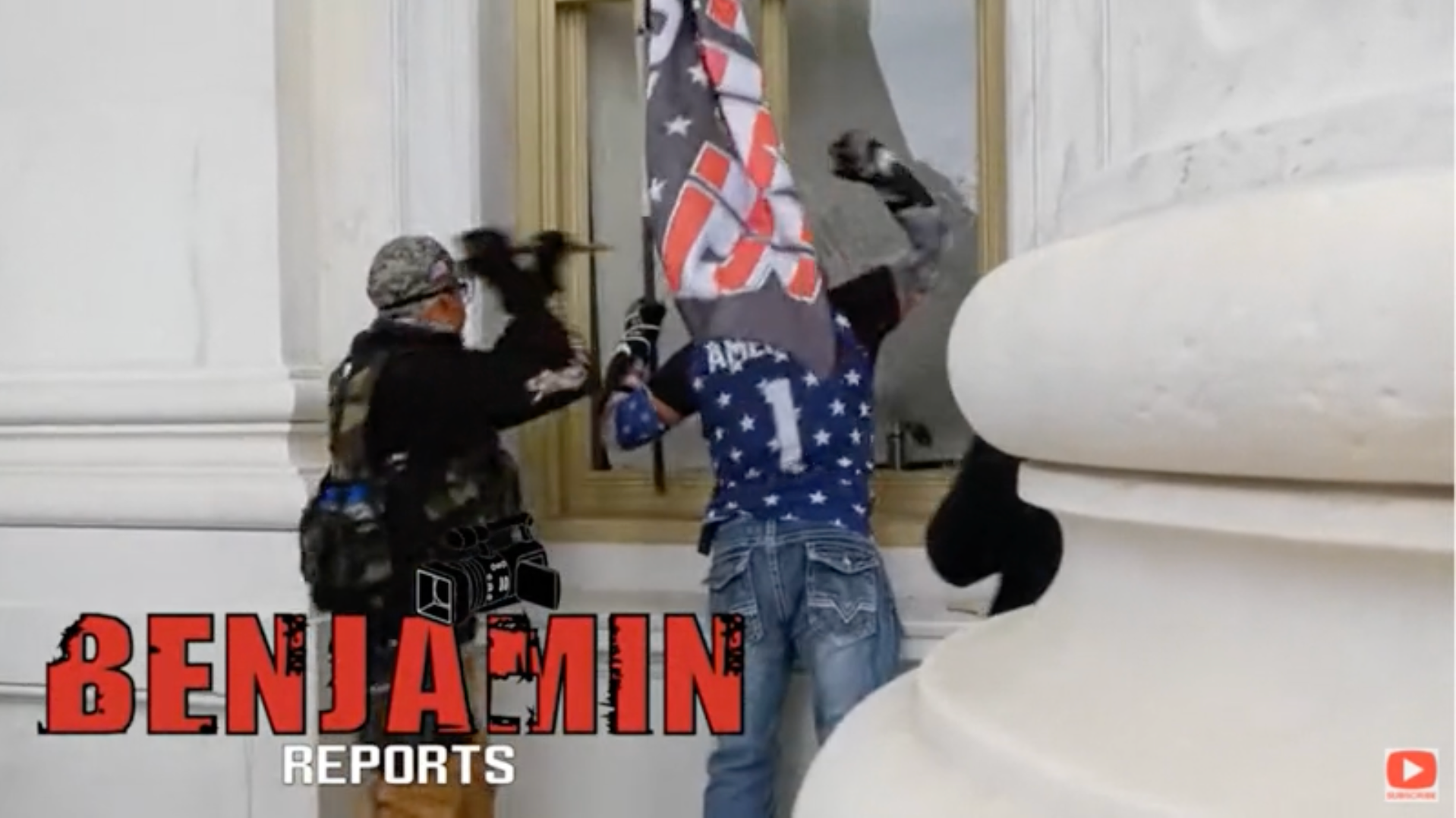
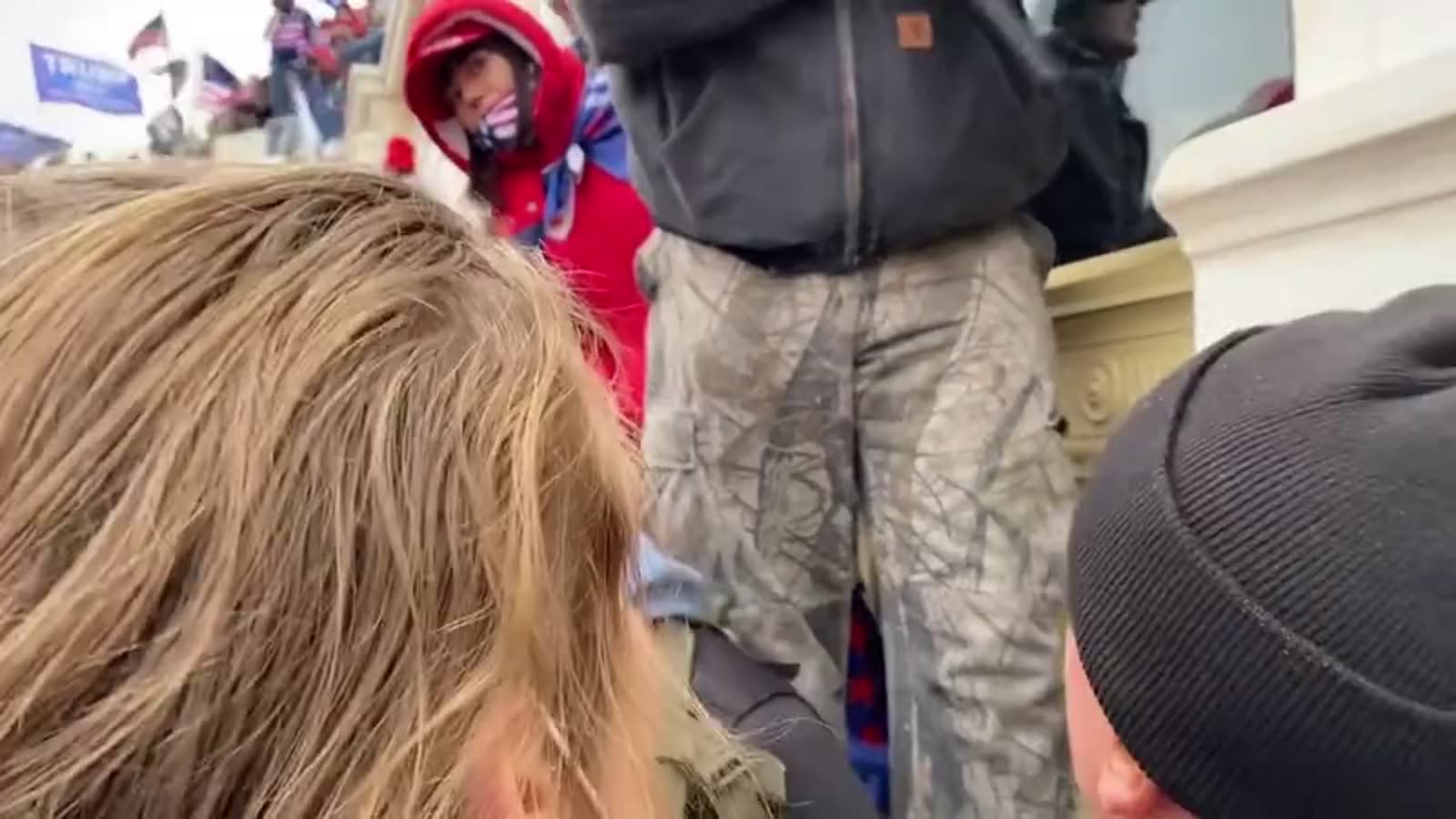
Photo collage of imagery from the day of Jan. 6. Rioters swarm the Capitol; a woman angrily shouts; two men break a window; police officers try to wash chemicals from their eyes; and a man smokes inside the Capitol building.

Chapter 3: How the assault on the Capitol unfolded

Scroll down to see how key moments unfolded.

Morning of …
C-SPAN

On the morning of Jan. 6, 2021, Trump held a “Save America” rally at the Ellipse, a site near the White House and approximately 2 miles away from the U.S. Capitol. Multiple speakers promoted false claims of voter fraud and advocated for Pence to overturn the election results.

Former New York Mayor Rudy Giuliani spoke at the rally and argued that more time was needed to investigate alleged election fraud.

“Let’s have trial by combat. I’m willing to stake my reputation — the president is willing to stake his reputation — on the fact that we’re going to find criminality there.”

The U.S. Secret Service screened approximately 28,000 people who watched Trump’s speech at the Ellipse. Agents confiscated “269 knives or blades, 242 canisters of pepper spray, 18 brass knuckles, 18 tasers, 6 pieces of body armor, 3 gas masks, [and] 30 batons or blunt instruments,” according to a subsequent congressional investigation.
10:28 a.m.
Department of Justice

Meanwhile, at 10:28 a.m., more than an hour before Trump began speaking, a large group of Proud Boys gathered near the Washington Monument and began marching toward the Capitol. U.S. Capitol Police estimated that there were roughly 200 people with the group. Ethan Nordean, a prominent member of the Proud Boys, helped lead them on their march.

11:47 a.m.
Department of Justice

The group of Proud Boys marched around the Capitol and arrived at the east side of the building.

At 11:47 a.m., Daniel Scott, a Proud Boy known by the nickname “Milkshake,” yelled: “Let’s take the f***ing Capitol!”

“Let’s not f***ing yell that, all right?” responded another Proud Boy.

“Idiot,” replied Proud Boy leader Ethan Nordean.

“Don’t yell it, do it,” another member of the group replied, as the group continued their march.

12:15 p.m.
C-SPAN

Trump began his speech at noon and reiterated his false claims that “radical-left Democrats” and “the fake news media” had “stolen” the election, and he pressured Pence to block the certification of the election.

“I hope Mike is going to do the right thing,” Trump said. “He has the absolute right to do it.”

In the first half of his speech, at about 12:15 p.m., Trump told the crowd that he would join a march to the Capitol after his remarks.

“We’re gonna walk down to the Capitol, and we’re gonna cheer on our brave senators and congressmen and women, and we’re probably not going to be cheering so much for some of them. Because you’ll never take back our country with weakness. You have to show strength, and you have to be strong.”

He later added:

“I know that everyone here will soon be marching over to the Capitol building to peacefully and patriotically make your voices heard.”

Some members of the crowd immediately started walking to the Capitol.

12:42 p.m.
Federal Bureau of Investigation

A confluence of events heightened tensions for both law enforcement and demonstrators.

First, at 12:42 p.m., the U.S. Capitol Police reported that a pipe bomb had been discovered near the headquarters of the Republican National Committee.

In response, the Capitol Police diverted officers and resources to secure the site of the bomb, evacuate nearby buildings and investigate.

12:53 p.m.
Department of Justice

By 12:53 p.m., before Trump’s speech concluded, key members of the Proud Boys and other pro-Trump demonstrators had gathered at the Peace Circle on the west side of the Capitol grounds, an area guarded by a small number of police officers.

Rioters soon overwhelmed the police bike racks, knocking U.S. Capitol Police Officer Caroline Edwards to the ground.

The crowd then massed along the west front of the Capitol, where scaffolding and stages had been set up for the upcoming presidential inauguration.

1:02 p.m.

At 1:02 p.m., Pence announced that he would not yield to Trump’s pressure and would proceed with certifying the 2020 election.

"It is my considered judgment that my oath to support and defend the Constitution constrains me from claiming unilateral authority to determine which electoral votes should be counted and which should not."

Pence’s announcement enraged many demonstrators.

1:03-1:07 p.m.
Federal Bureau of Investigation

As rioters began to surge onto the west front of the Capitol grounds, Capitol Police made two alarming discoveries, adding to the chaos and further diverting attention and resources.

At 1:03 p.m., near the headquarters of the Republican National Committee, officers found a red pickup truck belonging to a Trump supporter. The vehicle contained an assault rifle, a handgun, ammunition and 11 Molotov cocktails.

Then, at about 1:05 p.m., Capitol Police discovered an additional pipe bomb near the headquarters of the Democratic National Committee.

The FBI later determined that the pipe bombs were placed on the evening of Jan. 5. A suspect in the bombing was arrested in 2025 and allegedly told investigators that he believed the 2020 election had been “tampered with” and opposed both political parties.

1:10 p.m.
C-SPAN

As Trump wrapped up his speech at the Ellipse, he told the crowd, “We fight like hell. And if you don’t fight like hell, you’re not going to have a country anymore.”

Moments later, at 1:10 p.m., Trump finished his speech, again urging the crowd to march to the Capitol.

1:10-2:12 p.m.
Department of Justice

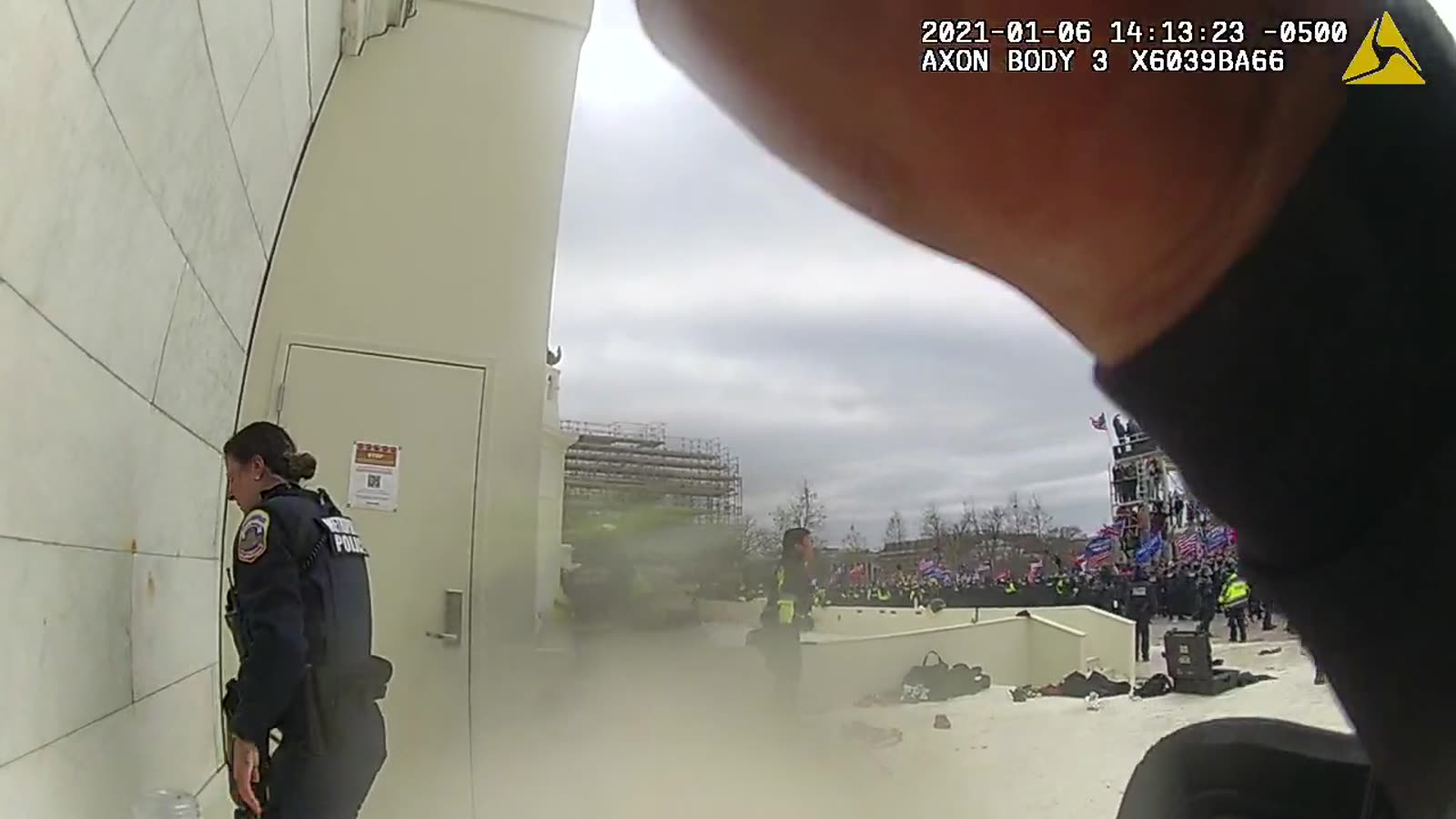
After Trump finished his speech, more people joined the mob on the west front of the Capitol, where violence against police continued to escalate. Rioters used pepper spray, bear spray and other weapons to assault police. At approximately 2 p.m., police played a recorded message on a loudspeaker stating, “All people must leave the area immediately. Failure to comply with this order may subject you to arrest and may subject you to the use of a riot control agent or impact weapon.”

2:13 p.m.
Department of Justice

At 2:13 p.m., a group of rioters broke through police lines and reached a doorway on the northwest side of the Capitol.

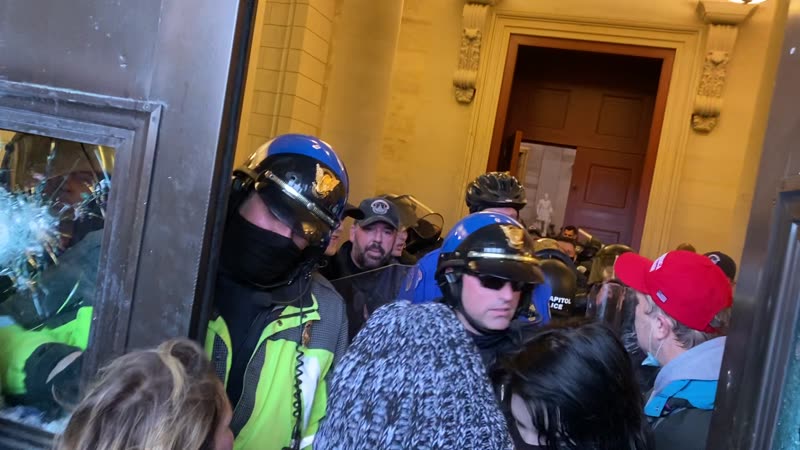
A member of the Proud Boys, Dominic Pezzola, used a stolen police shield to break a window, allowing rioters to enter the building. This marked the first breach of the Capitol.

Members of Congress were still on the Senate and House floors, and Pence and congressional staff were also still inside.

2:24 p.m.

At 2:24 p.m., Trump posted on Twitter from the White House:

Mike Pence didn’t have the courage to do what should have been done to protect our Country and our Constitution, giving States a chance to certify a corrected set of facts, not the fraudulent or inaccurate ones which they were asked to previously certify. USA demands the truth!
2:25 p.m.
Department of Justice

At 2:25 p.m., one minute after Trump attacked Pence in a tweet, the Secret Service evacuated Pence and his family from the Capitol.

Rioters had come within 40 feet of Pence.

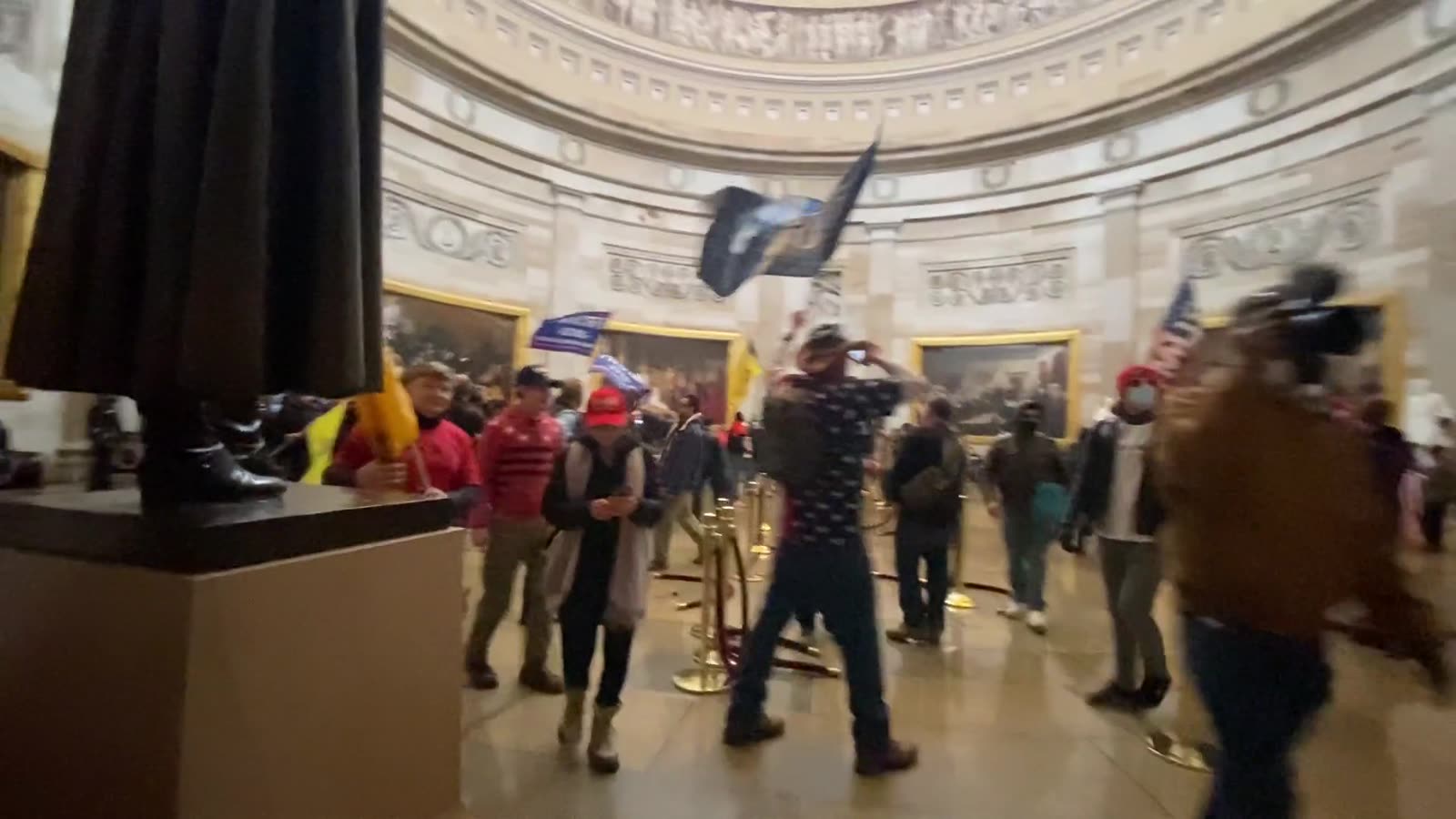
Meanwhile, at approximately that same time, rioters violently breached the east Rotunda doors of the Capitol. This entrance was subsequently used by members of the Oath Keepers, a far-right militia group, who entered the building in a military-style “stack” formation.

2:35 p.m.
Department of Justice

At 2:35 p.m., rioters reached a vestibule to a door outside the U.S. House chamber. Rioters broke glass panels of the door and subsequently confronted law enforcement trying to protect members of Congress sheltering inside. A rioter recorded this video of the door to the House chamber as law enforcement pointed guns at them.

2:38 p.m.

At 2:38 p.m., Trump posted on Twitter:

Please support our Capitol Police and Law Enforcement. They are truly on the side of our Country. Stay peaceful!

Trump posted this message more than an hour and a half after rioters first assaulted Capitol Police and entered the restricted area by the Capitol.

2:39 p.m.
Andrew Harnik/AP

At 2:39 p.m., Peter Welch — then a congressman from Vermont — posted on Twitter that he and other members of Congress trapped in the House chamber had been instructed to put on gas masks. Some members of Congress prayed or made calls to family members, fearing that they were about to be killed.

2:42 p.m.
Department of Justice

By 2:42 p.m., rioters had breached the chamber of the U.S. Senate.

2:44 p.m.
Department of Justice

By 2:44 p.m., a group of rioters reached a set of doors leading to another entrance to the House floor — the Speaker’s Lobby.

A rioter named Zachary Alam smashed the window.

On the other side of the door, a member of the U.S. Capitol Police, Michael Byrd, had his gun raised.

A 35-year-old rioter named Ashli Babbitt began to climb through the opening.

Byrd fired a single shot, striking Babbitt in the shoulder. She later died of her wounds.

The riot continued for another two hours, with rioters breaching multiple entrances across the Capitol.

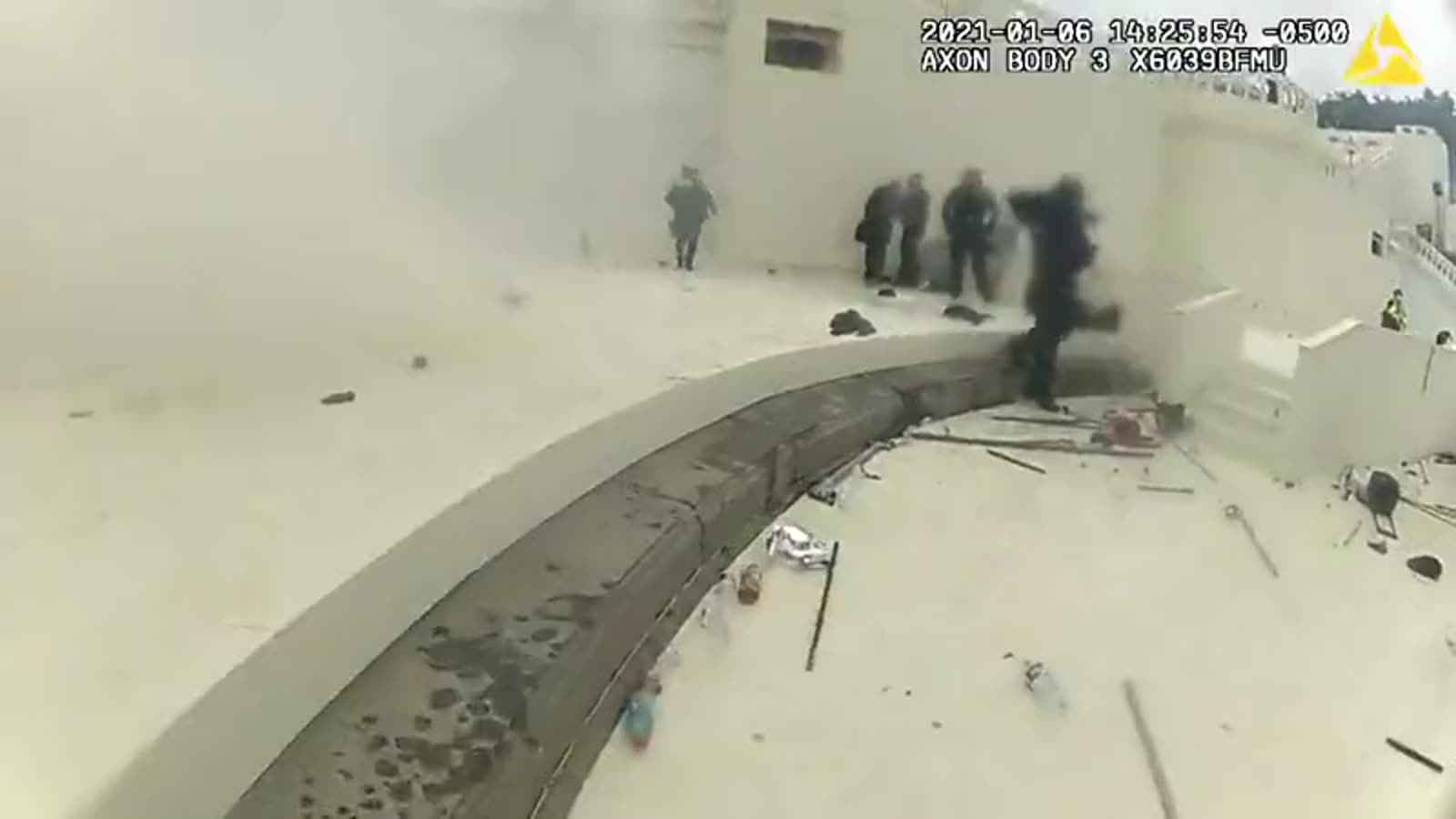
Some of the most extreme violence took place in a tunnel on the lower west terrace of the U.S. Capitol, where police maintained a line against the mob.

4:17 p.m.
C-SPAN

At 4:17 p.m., more than two hours after the breach of the Capitol, Trump posted a video repeating his false claims of election fraud and praising his supporters, while also calling on them to go home.

“I know your pain. I know you’re hurt.

“We had an election that was stolen from us. It was a landslide election, and everyone knows it…”

He urged his supporters to leave the Capitol.

“So go home. We love you. You’re very special. You’ve seen what happens. You see the way others are treated that are so bad and so evil.

“I know how you feel. But go home, and go home at peace.”

4:50 p.m.
Department of Justice

By around 4:50 p.m., police, who had received backup from other agencies, were able to clear rioters out of the building.

The Washington, D.C., National Guard arrived at 5:40 p.m., four hours after the U.S. Capitol Police chief first began reaching out to officials for National Guard support.

6:01 p.m.
8:06 p.m.
C-SPAN

At 8:06 p.m., Pence called the Senate to order, and at 9:02 p.m., Speaker of the House Nancy Pelosi called the House to order.

The following morning, at 3:44 a.m., Congress finally certified the 2020 election results.

There are seven deaths directly linked to the Jan. 6 attack.

Kevin Greeson and Benjamin Philips died due to medical emergencies they suffered while in the crowd outside the Capitol.

Ashli Babbitt was shot and killed by police inside the Capitol while attempting to climb through a barricaded door to the Speaker’s Lobby, which leads to the House chamber.

Rosanne Boyland collapsed and was crushed by the mob during a period of intense fighting near the lower west terrace tunnel. A subsequent report from the Washington, D.C., medical examiner attributed her death to an accidental overdose of amphetamines, Boyland’s medication for ADHD.

Capitol Police Officer Brian Sicknick was assaulted with pepper spray while defending the Capitol. Later that evening, Sicknick collapsed and was taken to the hospital. He died on Jan. 7, 2021. The Washington medical examiner determined that Sicknick died due to natural causes — the result of two strokes. Sicknick’s family told NPR that they believe the riot contributed to his death.

Two other police officers who defended the Capitol on Jan. 6, Jeffrey Smith and Howard Liebengood, died by suicide in the days immediately following the attack. The Department of Justice formally classified their deaths as "in the line of duty."

In addition to those deaths, the Department of Justice estimated that the attack caused approximately $3 million in damage to the Capitol. A report from the U.S. Government Accountability Office identified a total of $2.7 billion in costs to taxpayers related to the Jan. 6 attack, including, among other things, funds to address “security needs and investigations.”

Meanwhile, police officers who served on Jan. 6 are still coping with the aftermath of the attack.

In court, police officers who responded to the violence on Jan. 6 described the physical and mental injuries they suffered. Court documents redacted some of their names due to concerns of threats and harassment.

“There’s a common thread of emotions amongst many officers who were defending the Capitol on January 6, 2021, which is that we all thought we were going to die.”

— Officer Stephen Sherman, U.S. Capitol Police

“Jan. 6 was a nightmare for me that nearly cost me my life … I have been sentenced to a lifetime of medical issues that include physical pain and mental and emotional distress. There is not a day that goes by that pain, discomfort, and/or a mental health issue do not flare up to remind me of that day.”

— Sgt. Federico Ruiz, U.S. Capitol Police

“One of the hardest moments of my life was returning home and seeing my wife at 2:30am weeping in despair and relief knowing that I made it home. No one should ever endure that, no one should ever wake up not knowing if a loved one will come home. My family will never be the same again.”

— Agent M.L., U.S. Capitol Police

“I suffered from unbearable back pain that kept me from playing with my children. Before I was attacked, I could run and play with my children and enjoy time and activities with my wife. I loved to do yard work and it gave me great joy. But the Defendant took that away from me.”

— Sgt. Robinson, U.S. Capitol Police

Photo collage of images of various people charged for Jan. 6, all arranged around an illustration of the Capitol building.

Chapter 4: The investigation

Political leaders across the spectrum — including President Trump — called for the rioters to face justice.

Because so few people were arrested during the attack, extremists who led the riot remained free, and some made comments suggesting more violence was coming. Joe Biggs, a Proud Boys leader, said Jan. 6 was just a “warning shot.”

Just days after the riot, Stewart Rhodes, the leader of the Oath Keepers, was recorded discussing violence against Pelosi. Federal prosecutors later introduced the recording as evidence at trial.

Listen: After Jan. 6, Rhodes continued to discuss violence
6 sec.

“We should have brought rifles. We could have fixed it right then and there. I’d hang f***in’ Pelosi from the lamppost.”

The federal investigation into the Capitol attack was the largest in American history, leading to arrests of more than 1,500 people from all 50 states in the country.

The most serious cases were made against leaders of the Proud Boys and Oath Keepers. Both Biggs and Rhodes were among the extremists ultimately convicted of seditious conspiracy against the United States for their roles in planning the attack.

Jan. 6 prosecutions, by the numbers

1,575
total federal arrests
418
accused of violence
2
fully acquitted at trial
1,030
pleaded guilty
Highest sentence
22 years, Enrique Tarrio, leader of the Proud Boys, convicted of seditious conspiracy
Median sentence
For all cases — 30 days; for cases with some jail time — 210 days
Percentage of sentenced defendants who went to jail or prison
64%
Percentage of riot defendants with ties to extremist groups
12%
Percentage of riot defendants with past history in law enforcement
1.8%
Percentage of riot defendants who served in the military
14.6%
Read all of the Jan. 6 charges in our defendants database
A photo of the Capitol building with a mass of rioters in front. The photo is ripped so that the section with the rioters is detached from the building.

Chapter 5: The pardons and rewriting of Jan. 6

While Trump initially condemned the Jan. 6 attack, he soon began embracing the rioters, describing them as “political prisoners” and “hostages.”

When Trump won the 2024 election, his transition team did not indicate precisely who would receive pardons.

On Jan. 12, 2025, just eight days before the inauguration, incoming Vice President Vance told Fox News Sunday that “of course” the administration would not pardon defendants convicted of assaulting police.

“I think it’s very simple. Look, if you protested peacefully on January 6th, and you had Merrick Garland’s Department of Justice treat you like a gang member, you should be pardoned,” Vance said. “If you committed violence on that day, obviously you shouldn’t be pardoned. And there’s a little bit of a gray area there.”

But as one of his first acts in office, Trump issued mass pardons to Jan. 6 defendants. Only 14 defendants — all of whom were linked to extremist groups — received commutations rather than a full pardon, meaning they were released from prison, but the convictions remained on their records.

Trump’s pardon also included defendants who had prior criminal records for crimes including sexual assault, manslaughter and rape.

The administration subsequently deleted a government database of Jan. 6 cases, and evidence began disappearing from a site maintained to share court exhibits with the media.

NPR joined a coalition of media organizations that went to federal court to preserve access to video evidence from the Jan. 6 cases. Hundreds of those videos are now publicly accessible through NPR’s database of all of the prosecutions.

On June 6, 2025, the Trump administration settled a lawsuit brought by Ashli Babbitt’s family for $4.975 million. Later that year, on Nov. 7, Trump granted a sweeping pardon to “all United States citizens…for any conduct relating to their efforts to expose voting fraud and vulnerabilities in the 2020 Presidential Election.” The immediate effect of that pardon, which applies to federal charges, was largely symbolic.

Trump has also stocked his administration with people who advocated for Jan. 6 defendants, spread conspiracy theories about the attack, and, in one instance, a former Jan. 6 defendant.
Photo of Kash Patel
Kash Patel
FBI director
Spread conspiracy theories about Jan. 6, produced song with Jan. 6 defendants
Photo of Dan Bongino
Dan Bongino
Deputy FBI director (through January 2026)
Spread conspiracy theories about Jan. 6
Photo not available
Rachel Cauley
Communications director for White House Office of Management and Budget
Advocated for Jan. 6 defendants
Photo of Jared Wise
Jared Wise
Official at the Department of Justice
Former Jan. 6 defendant who stormed the Capitol and urged rioters to “kill” cops
Photo not available
Jonathan Gross
Official at the Department of Justice
Former defense lawyer for Jan. 6 defendants
Photo of Paul Ingrassia
Paul Ingrassia
Acting general counsel of the U.S. General Services Administration
Advocated for Jan. 6 defendants
Photo of Ed Martin
Ed Martin
U.S. pardon attorney and director of the Justice Department’s Weaponization Working Group
Advocated for Jan. 6 defendants, served as defense attorney for multiple Jan. 6 defendants

Dozens of federal prosecutors who worked on Jan. 6 cases were fired by the Trump administration. They have argued that the firings were retaliation for doing their jobs.

They have since faced harassment and death threats.

Since receiving pardons from Trump, some former Jan. 6 defendants have faced additional legal trouble.

Among those cases:

Andrew Paul Johnson pleaded not guilty to charges in Florida for alleged child sexual abuse, including the molestation of an 11-year-old child, according to court records and an arrest affidavit first reported by The Intercept. According to the affidavit, Johnson told one of the victims that he expected to receive a $10 million settlement from the Trump administration and would share a portion of it. “His tactic was believed to be used to keep [the child] from exposing what Andrew had done to him,” the affidavit states. Johnson had previously pleaded guilty to nonviolent charges for storming the Capitol on Jan. 6.
Photo of David Daniel David Daniel pleaded not guilty to federal charges of "Production of Child Pornography" and "Possession of Child Pornography," which "involved a prepubescent minor" and a child under 12 years old, according to prosecutors. Separately, Daniel pleaded guilty to a charge of assaulting police officers on Jan. 6, but he had not yet been sentenced when the Trump Department of Justice dismissed his case.
Photo of Christopher Moynihan Christopher Moynihan was arrested in New York in October for allegedly threatening House Minority Leader Hakeem Jeffries, writing that “he must be eliminated, I will kill him for the future.” Moynihan has pleaded not guilty. He was previously convicted at trial of obstructing an official proceeding and pleaded guilty to nonviolent misdemeanor charges for his actions on Jan. 6.
Photo of Robert Packer Robert Packer was photographed storming the Capitol while wearing a “CAMP AUSCHWITZ” sweatshirt and later pleaded guilty to nonviolent charges for his role in the riot. He subsequently faced multiple criminal charges for alleged violent attacks by dogs he owned. According to local news reports, one of the dog attacks sent multiple victims to the hospital.
Photo of Matthew Huttle Just days after receiving a pardon, Matthew Huttle was pulled over by a sheriff’s deputy in Jasper County, Indiana, for speeding. In addition to his nonviolent Jan. 6 charges, to which he pleaded guilty, Huttle had a history of legal trouble for drunk driving and child abuse. After the sheriff’s deputy told Huttle he was under arrest as a habitual traffic offender, Huttle reached for his handgun and was shot and killed by the deputy. The shooting was ruled justified.

In response to NPR’s questions about Trump’s pardons, White House spokeswoman Abigail Jackson said, "President Trump exercised his constitutional authority to issue pardons to individuals who were abused by the Biden justice system and aggressively over prosecuted for political purposes."

Judges from across the spectrum condemned the Jan. 6 attack.

Few people saw as much of the evidence from the Capitol riot as the judges who oversaw all of the Jan. 6 cases. Those judges heard arguments from prosecutors and defense attorneys, sat through hours of witness testimony, and reviewed extensive evidence presented at trial. Regardless of their ideological leanings or the president who appointed them, the judges described the attack on the Capitol as a threat to democracy and a stain on the nation’s history.

“Violence risks begetting a vicious cycle that could threaten cherished conventions and imperil our very institutions of government. In that sense, political violence rots republics. Therefore, January 6 must not become a precedent for further violence against political opponents or governmental institutions. This is not normal. This cannot become normal. We as a community, we as a society, we as a country cannot condone the normalization of the January 6 Capitol riot.”

— Judge Royce Lamberth, appointed by President Ronald Reagan

“That day broke our previously unbroken tradition of peacefully transferring power, which is truly among the most precious things that we had as Americans. And that previously unbroken tradition is broken now. And it is going to take time and effort to fix it.”

— Judge Timothy J. Kelly, appointed by President Trump

“On January 6th, 2021, you participated in a national embarrassment. […] The sights that we saw on January 6th, the crimes you and others committed on that day, are things Americans never thought they’d see in the Capitol Building. And we certainly hope never to see them again.”

— Judge Trevor McFadden, appointed by President Trump

“The prosecutions in this case and others charging defendants for their criminal conduct at the U.S. Capitol on January 6, 2021, present no injustice, but instead reflect the diligent work of conscientious public servants, including prosecutors and law enforcement officials, and dedicated defense attorneys, to defend our democracy and rights and preserve our long tradition of peaceful transfers of power — which, until January 6, 2021, served as a model to the world.”

— Judge Beryl A. Howell, appointed by President Barack Obama

Judge Colleen Kollar-Kotelly, who was appointed to the bench by President Bill Clinton, wrote that Trump’s pardons and commutations could not change the truth of what took place on Jan. 6, established in court across more than 1,500 cases.

Those records are immutable and represent the truth, no matter how the events of January 6 are described by those charged or their allies.